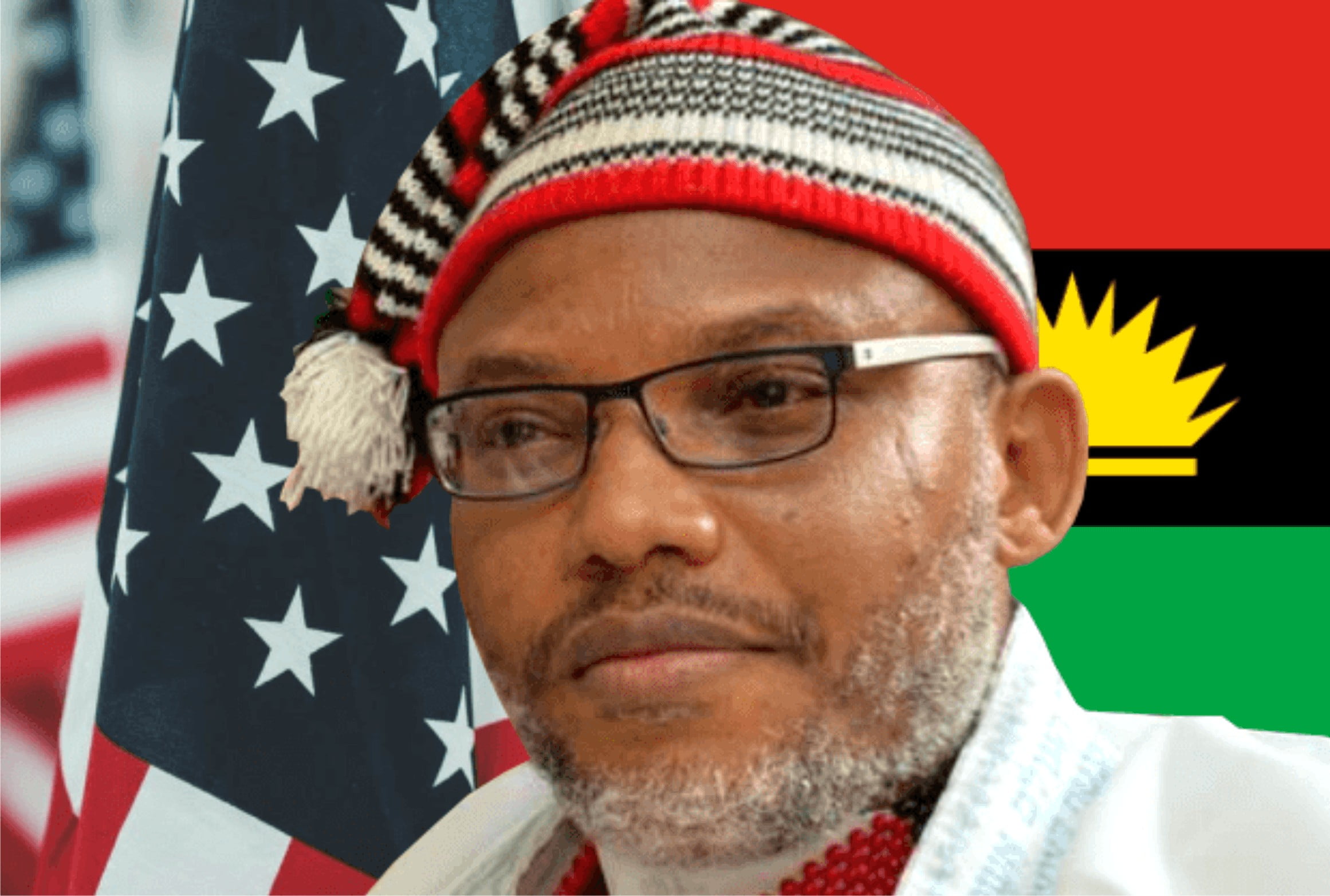

Human rights lawyer Christopher Chidera has accused the Nigerian government of holding Nnamdi Kanu hostage not for legal reasons, but for daring to speak uncomfortable truths. Addressing journalists in Abuja on Thursday, July 18, 2025, Chidera described the IPOB leader’s prolonged detention as political persecution disguised as national security.
The fiery lawyer questioned why, after nearly four years in detention, the government has failed to formally charge Kanu for his most controversial claims — including allegations about the death of former President Muhammadu Buhari. “If he lied about something so grave, why haven’t they prosecuted him for misinformation?” he asked pointedly.
Chidera asserted that Kanu’s real offense is his unwavering criticism of state injustice and his influence over millions in the South-East. “They fear his voice, not his actions,” he stated. “Kanu’s consistency, courage, and sacrifice have made him a symbol of resistance. That’s what terrifies the establishment.”
Beyond the legal context, the lawyer issued a broader indictment of African governance and civic awareness. He argued that Africans remain enslaved not by colonial ghosts, but by intellectual laziness. “Our tragedy is that we don’t question, we just conform. Until we break that cycle, freedom will remain a mirage.”
The activist further urged civil society, particularly across Africa, to scrutinize power with the same intensity that colonialism is critiqued. He said Kanu’s case is a litmus test for Africa’s ability to stand up to systemic oppression cloaked in democratic language.
The legal community has increasingly raised alarms over the state’s refusal to obey court orders related to Kanu’s release. Several regional and international observers have criticized the Nigerian government for what they call selective application of justice.
With the IPOB leader’s next hearing approaching, pressure continues to mount for his unconditional release, as supporters plan renewed demonstrations in the coming weeks across Enugu, Abia, and parts of the diaspora.