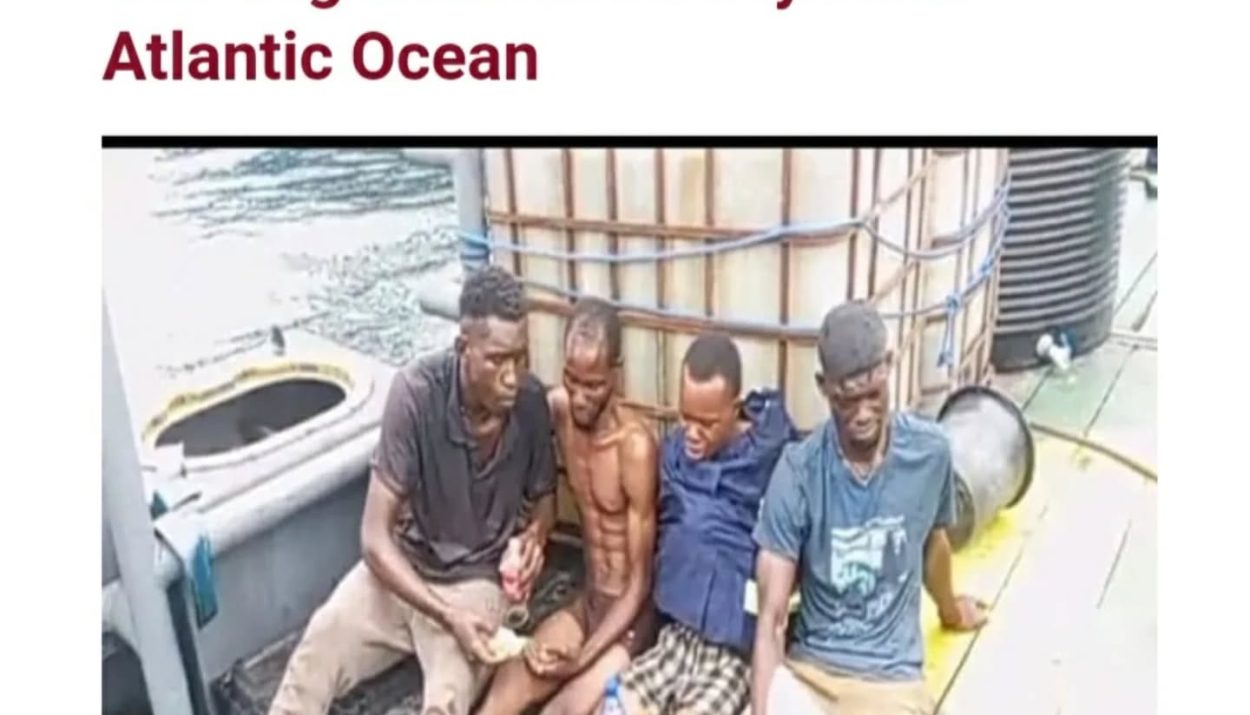

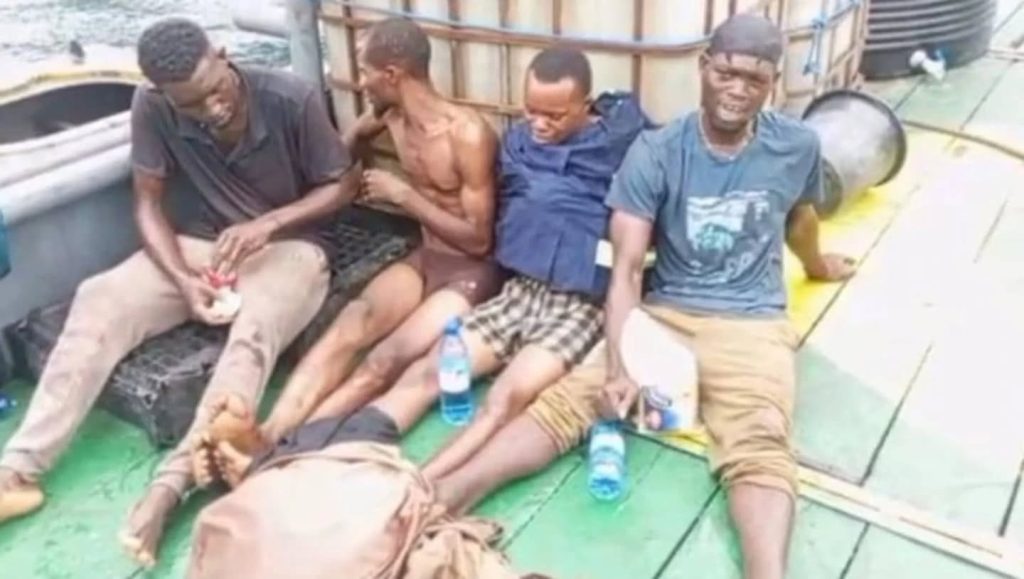
Four young Nigerian men were miraculously rescued from the Atlantic Ocean after being thrown overboard by the crew of a foreign vessel they had boarded in a desperate attempt to escape Nigeria’s worsening economic conditions. The men, identified as James John, Favour Efe, Kingsley Williams, and Kingsley Mathew, had stowed away on the ship hoping to reach safer shores but were violently cast into open waters by the crew.
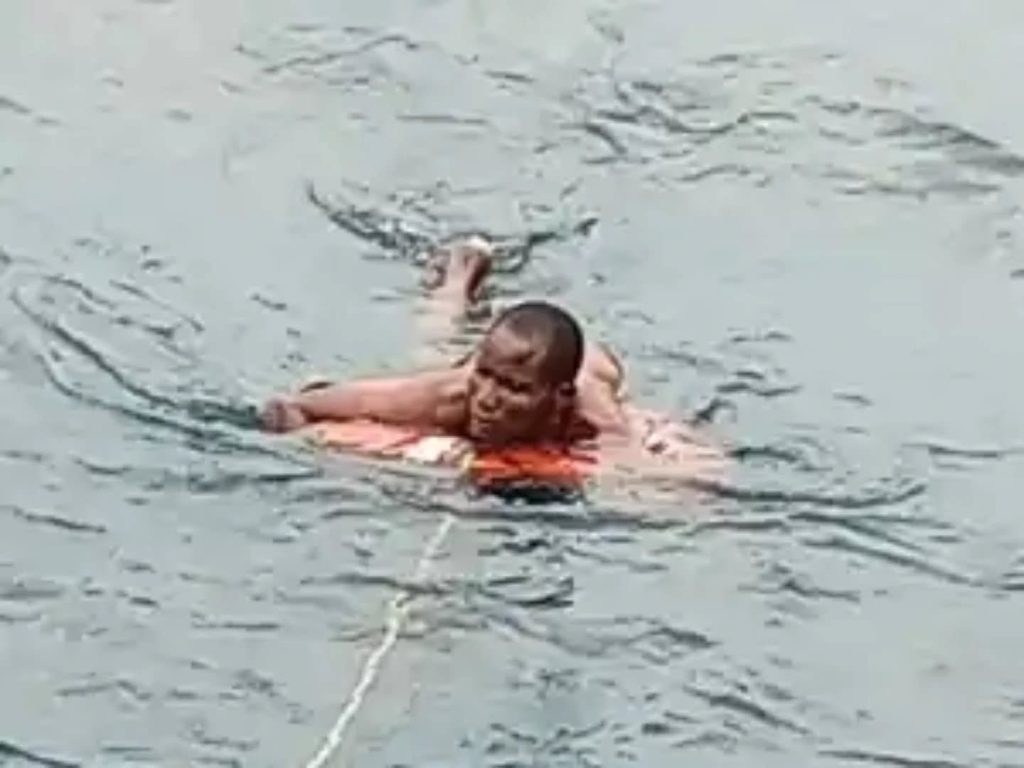
The near-tragic incident was salvaged thanks to the swift action of a France-based Nigerian maritime logistics company owned by Mr. Harrison Niyi Alonge, a businessman originally from Ekiti State. The crew of Alonge’s vessel reportedly detected suspicious movement and sounds from the ocean, prompting a rapid emergency response that led to the rescue.
According to Olawale Ezekiel, the firm’s public relations officer, the young men were found clinging to debris, visibly traumatized and barely conscious. “Another few minutes and they might not have made it,” Ezekiel said in a statement issued on Thursday, May 22, 2025. “They were weak, freezing, and terrified. But they are alive — that alone is a miracle.”
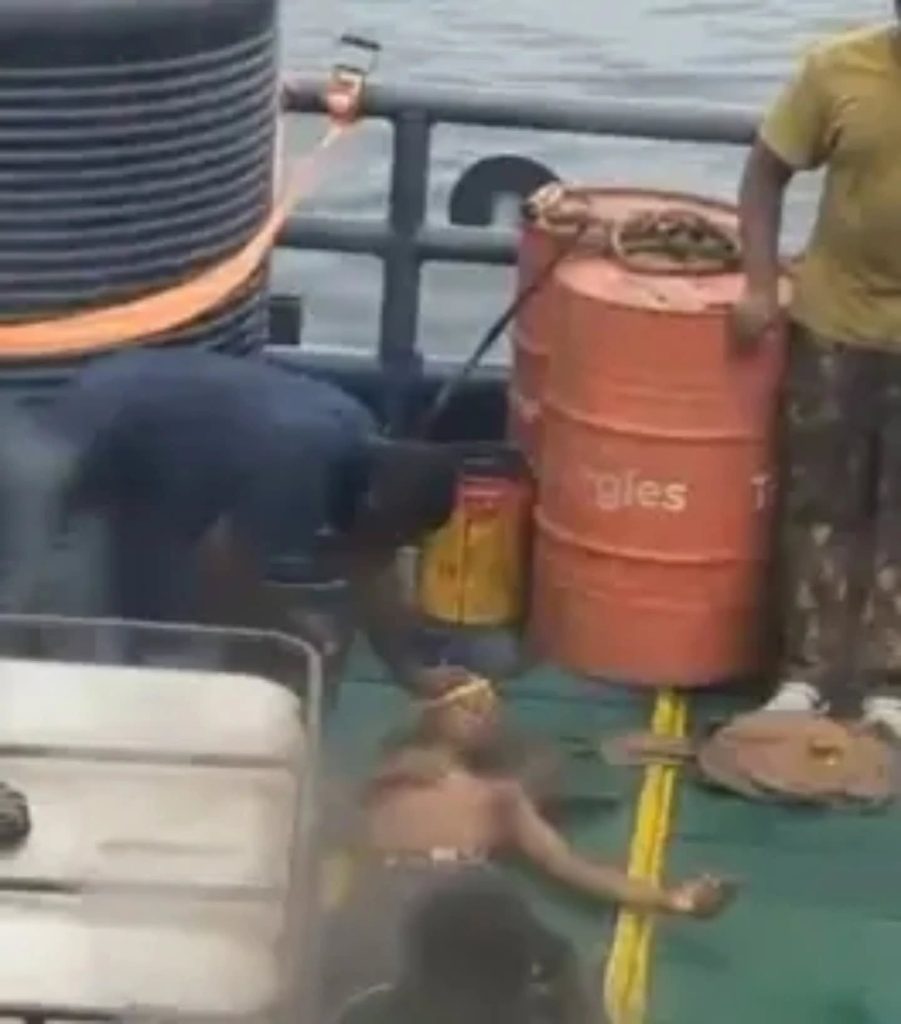
The rescued stowaways were handed over to officials of the Nigerian Navy at Atlas Cove, Takwa Bay, where they are now receiving medical care and undergoing debriefing. Authorities say all four are in stable condition, though the psychological impact of the ordeal remains severe.
This incident has reignited discussions about Nigeria’s escalating migration crisis, where mounting economic hardship, rising unemployment, and persistent insecurity have driven a surge in dangerous, illegal migration routes. According to the International Organization for Migration (IOM), hundreds of Nigerians attempt maritime escapes annually, often unaware of the life-threatening risks.
Human rights groups and maritime watchdogs have condemned the actions of the vessel’s crew, calling for a full international investigation into the attempted murder of the four men. If proven, the act could constitute a violation of multiple international maritime and humanitarian laws.
As the story circulates globally, many are praising Mr. Alonge’s firm for its life-saving intervention — a rare glimpse of hope in an otherwise grim narrative of desperation and neglect. For the rescued men, their survival now stands as both a second chance and a sobering reflection of a nation’s failure to secure the future of its youth.