
Tinubu’s 2027 Re-Election Bid Faces Tough Test as Nigerians Weigh Cost of Living, Security
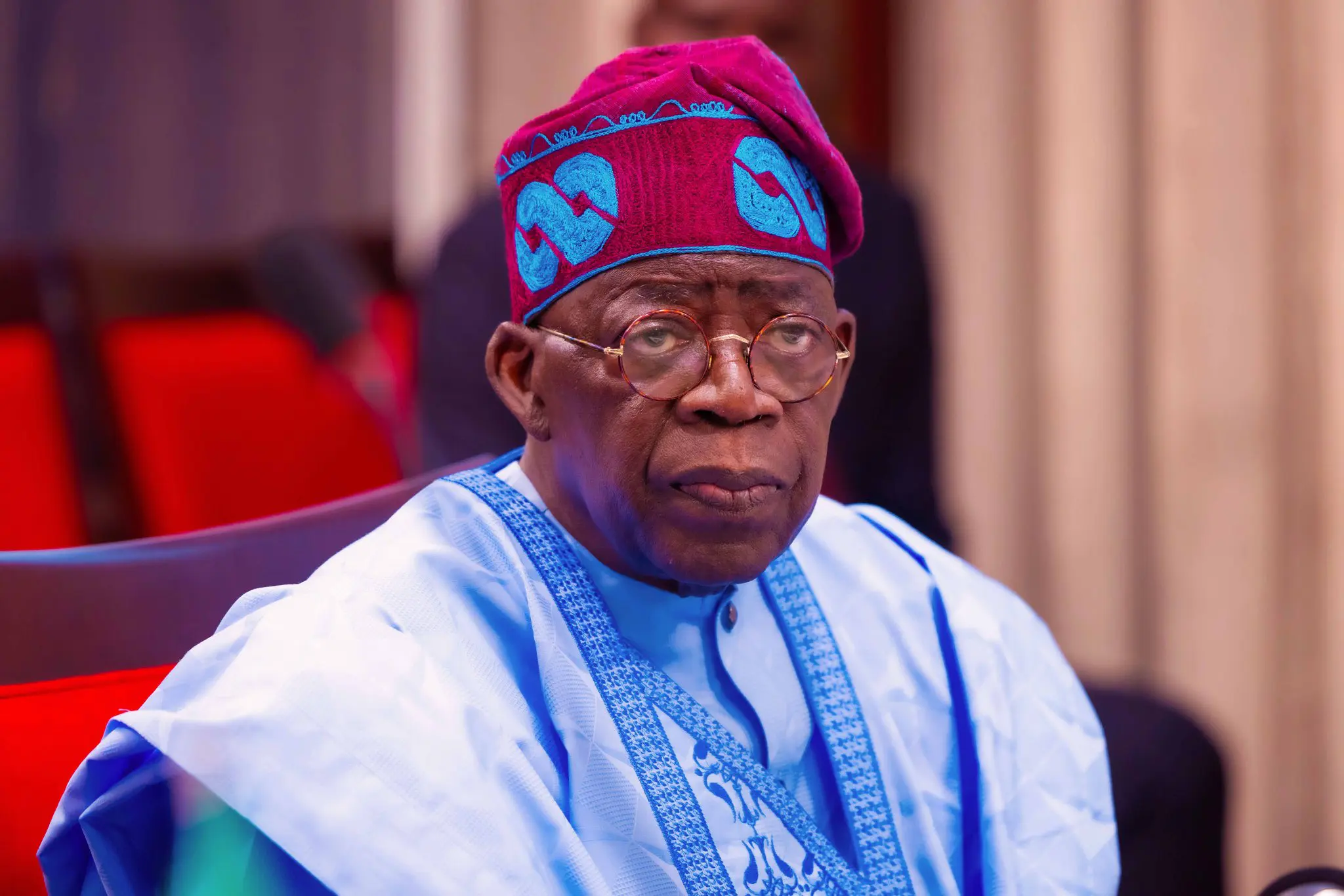
President Bola Tinubu’s bid for a second term will be tested by a simple but politically difficult question as Nigeria’s 2027 election campaign begins: are Nigerians better off after more than a decade of All Progressives Congress (APC) rule?
Tinubu is seeking another term as he faces former Vice President Atiku Abubakar and Peter Obi, both of whom are seeking to turn public frustration over economic hardship and insecurity into an electoral advantage. The APC has governed Nigeria since 2015, first under former President Muhammadu Buhari and now under Tinubu.
Public sentiment could become a major obstacle for the president. Cheta Nwanze of SBM Intelligence said the organisation’s voter tracker found that almost 80% of Nigerians believe the country is moving in the wrong direction, while 45% identified economic hardship and insecurity as their biggest concerns.
Tinubu has pushed through some of Nigeria’s most significant economic reforms in years. His administration removed the long-standing petrol subsidy and devalued the naira twice, arguing that the measures were necessary to reduce costly state intervention and restore confidence in the economy. The government points to improved revenue and increased investor interest as evidence that the reforms are beginning to work.
But the economic argument is complicated by the experience of households. At Abuja’s Garki market, butcher Abdullahi Sani told Reuters that rising costs had sharply reduced his business. He said he once sold about six goats a day but now struggles to sell two, sometimes only one, making it harder to earn enough to support his family.
The pressure extends beyond food prices. World Bank data cited by Reuters shows Nigeria’s GDP per capita has fallen from $2,586 in 2015 to about $1,224, while official figures show the country’s debt climbed from N12.6 trillion at the end of 2015 to N159.35 trillion by March 2026. Debt-service costs are projected at $11.6 billion this year, placing further pressure on government finances.
Security is another major issue confronting Tinubu. His administration says military operations have reduced attacks, improved road safety and enabled some farmers to return to their farms. Critics, however, argue that violence has changed form rather than disappeared, with banditry in the northwest, separatist unrest in the southeast and ransom kidnappings continuing to threaten communities.
The election could therefore become a referendum on everyday survival rather than political slogans. Auwal Musa Rafsanjani of CISLAC/Transparency International Nigeria said voters are likely to focus on whether families can afford food, whether communities are safe and whether farmers can work without fear. Tinubu’s challenge is made harder by the fact that voters may judge him not only on his own record but on the APC’s wider 12-year performance.
Yet the opposition faces its own problem. While dissatisfaction with the ruling party could create an opening, divisions among opposition figures may make it difficult to convert public frustration into a united electoral challenge. For Tinubu, that fragmentation could prove crucial if voter turnout is low. Ultimately, the 2027 contest may come down to one question: whether Nigerians believe the hardship of recent years is the price of reforms that will eventually deliver results—or evidence that the APC has failed to deliver the change it promised in 2015.