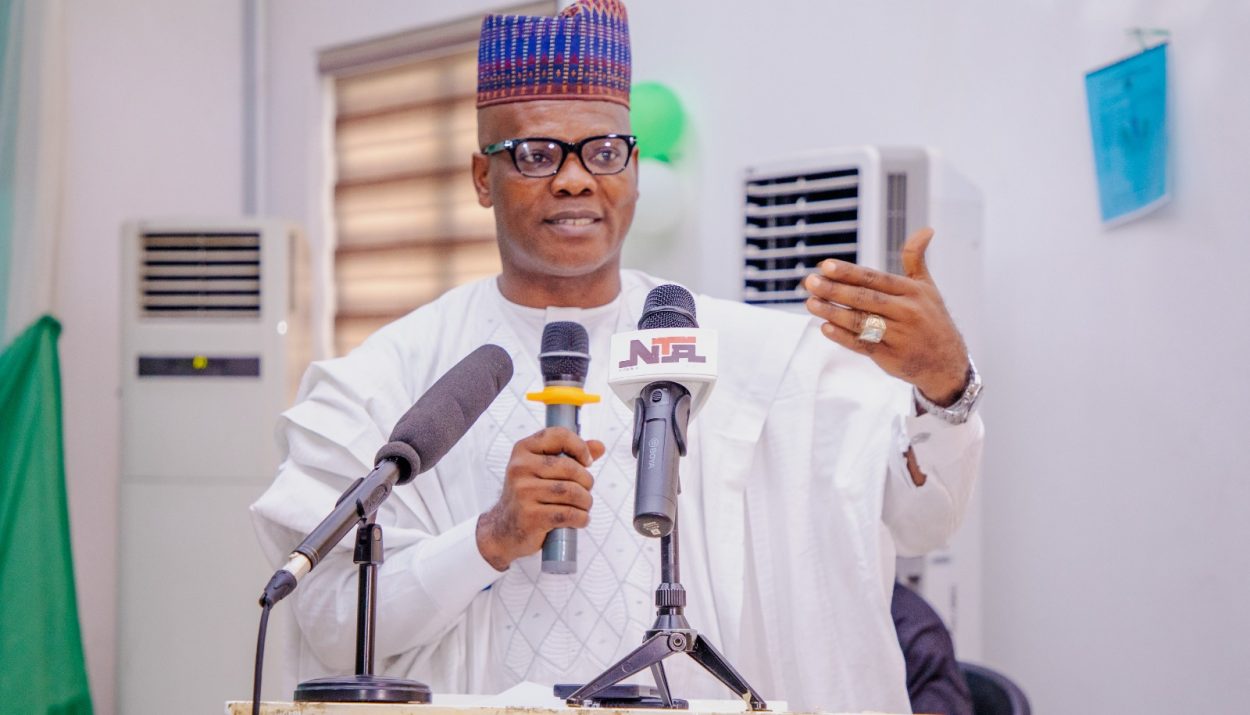

Nigeria may have spent too much time discussing what divides its people and too little time building an economy that gives different regions reasons to depend on one another, says businessman and trade advocate Nwabueze Buchi George.
His argument is that commerce can succeed in places where political appeals for unity often struggle. When people depend on another region for food, clothing, manufactured goods, markets or logistics, he believes that economic relationship creates a practical incentive for cooperation.
“Trade is a tool for healing and unity in Nigeria,” George said.
The idea rests on a simple question: instead of constantly amplifying ethnic weaknesses and regional disagreements, why not devote more attention to what each part of Nigeria produces particularly well?
George points to Aba as an example. The Abia State commercial city has long been associated with footwear, garments, leather products, fabrication and indigenous manufacturing. Onitsha has built enormous influence as a trading and distribution centre, while Lagos combines manufacturing, finance, ports, logistics and access to one of Africa’s largest consumer markets.
Northern Nigeria and the Middle Belt bring another critical part of the equation. Their agricultural communities supply grains, livestock, tubers and other food products consumed across the country.
For George, these are not isolated regional advantages. They are parts of the same national supply chain.
A trader in Lagos selling products made in Aba is connected to the livelihood of manufacturers in the South-East. A household buying food cultivated hundreds of kilometres away depends on the peace and productivity of those farming communities. Likewise, producers need transporters, distributors, financiers and consumers spread across different parts of the country.
That does not mean commerce will automatically erase ethnic tension. Nigerians who trade with one another can still disagree politically, culturally or religiously. But George argues that economic interdependence gives citizens something tangible to lose when conflict disrupts relationships between communities.
From Local Production to Global Standards
His argument goes beyond simply encouraging Nigerians to buy locally made goods.
George believes Nigerian manufacturers must also become more competitive.
That means improving product quality, packaging, branding, certification, consistency and the ability to meet international specifications. Roads, electricity, security, logistics, financing and industrial infrastructure must also improve if domestic companies are expected to compete successfully with imported alternatives.
This thinking is central to the National Products Fair 2026, scheduled to hold from September 21 to 25 at the International Conference Centre, Umuahia, Abia State.
The event is expected to bring together manufacturers, small and medium-sized businesses, innovators, investors, policymakers and other stakeholders while giving locally produced goods greater visibility.
For George, bringing the fair to Abia State places the conversation close to one of Nigeria’s most recognisable indigenous manufacturing centres.
But visibility alone will not be enough.
The real objective should be to help manufacturers raise their products to standards at which consumers choose Nigerian goods because they are competitive in quality and price, not simply because buyers are being encouraged to demonstrate patriotism.
A successful products fair, therefore, should produce more than crowded exhibition halls and photographs. Manufacturers should leave with stronger packaging, better business contacts, access to finance, certification opportunities, distributors and clearer routes into domestic and international markets.
A Career Increasingly Shaped by Trade
George’s emphasis on business visibility is also reflected in the evolution of his career.
OtownGist’s coverage of him stretches back to 2012, when he was active within Owerri’s entertainment, fashion, pageantry and events industry.
Over time, his public activities increasingly moved towards trade promotion and international business development.
By 2020, George was being identified with Trade Nigeria and the Globe Chamber of Commerce and Industry, promoting economic forums and international partnerships aimed at connecting Nigerian businesses with opportunities outside the country.
His later projects became more closely associated with Made-in-Nigeria campaigns, industrial promotion and efforts to improve access to international markets for Nigerian companies.
The direction of that journey is significant. What began around the promotion of events gradually became the promotion of businesses, products and eventually the idea of Nigeria itself as a production economy.
Change the Story Nigeria Tells About Itself
George also believes the country has a branding problem.
Nigeria’s political disputes, ethnic disagreements, insecurity and scandals frequently dominate both domestic conversations and the country’s international image.
He argues that Nigeria should become equally aggressive about telling the world what it makes.
If Aba produces quality footwear, that capability should be promoted.
If farmers across Northern Nigeria and the Middle Belt are critical to feeding the country, their production strength should receive infrastructure, investment and visibility.
The same principle applies to Nigerian food processors, garment makers, fabricators, technology companies, beauty brands, automobile firms and other manufacturers.
For George, the ambition is to gradually make “Made in Nigeria” represent quality and production capacity rather than a plea for consumers to lower their expectations.
That is also where his argument about national unity returns.
Trade will not solve every political or ethnic disagreement in Nigeria. But a country where livelihoods are visibly connected across regional boundaries may find it harder to sustain the idea that Nigerians from other parts of the country have nothing valuable to offer one another.
George’s proposition is therefore not that Nigerians should pretend their differences do not exist.
It is that the country should recognise what each region does well, invest in those strengths, connect producers to markets and allow prosperity to create relationships that political speeches have struggled to build.
If Nigeria can do that, the farmer in the North, manufacturer in Aba, trader in Onitsha and distributor in Lagos stop looking like separate regional stories.
They become parts of the same economy.