Nigeria’s Super Falcons are back on the continental stage with one goal in mind—defend their Women’s Africa Cup of Nations (WAFCON) crown and reinforce their status as Africa’s most successful women’s football team.
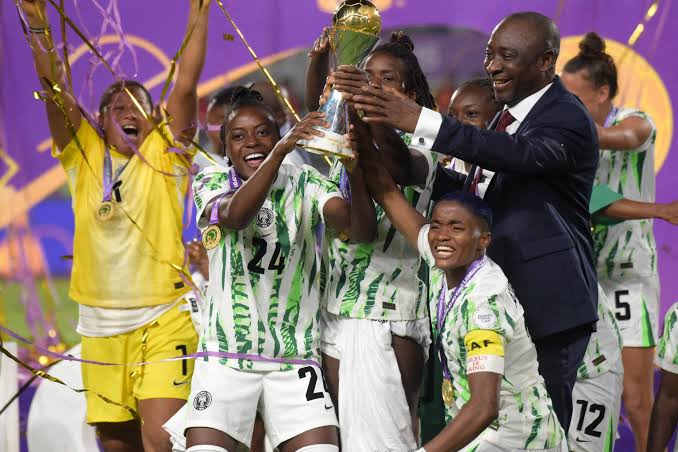
Fresh from winning a record-extending 10th WAFCON title in Morocco last year, the Super Falcons return to the North African nation carrying the weight of expectation. Head coach Justin Madugu admits the challenge will be tougher this time, with every opponent determined to dethrone the defending champions.
“Now that we are champions, every other team will want to draw you down,” Madugu said ahead of Nigeria’s opening Group C clash against tournament debutants Malawi. “It’s not going to be easy. We are quite aware of that and we are going to be fully ready.”
Nigeria’s group also features Zambia and Egypt, with assistant coach Ann Chiejine warning that no fixture should be taken lightly. She said the growing quality of women’s football across the continent means the Super Falcons must continue to improve if they hope to retain the title.
The defending champions arrive with a squad packed with experience. Captain Rasheedat Ajibade, reigning African Goalkeeper of the Year Chiamaka Nnadozie and six-time African Women’s Player of the Year Asisat Oshoala are expected to provide leadership throughout the tournament. At the same time, Madugu has introduced several young talents, including Sweden-based striker Joy Omewa and goalkeeper Comfort Erhabor, who recently made her senior international debut.
Erhabor, who was born in the Netherlands and raised in England, said representing Nigeria was an easy decision. The Portsmouth goalkeeper described wearing the green and white jersey as a privilege and praised the welcoming atmosphere within the national team, adding that experienced stars have helped young players settle quickly.
Although Nigeria remain favourites, the road to another title is expected to be far more demanding. Malawi may be making their WAFCON debut, but the Scorchers boast the dangerous Chawinga sisters, Tabitha and Temwa, while Zambia’s attacking duo of Barbra Banda and Racheal Kundananji have already established themselves among Africa’s biggest stars.
Beyond continental glory, there is even more at stake this year. The expanded 16-team tournament also serves as a qualification competition for the 2027 FIFA Women’s World Cup in Brazil, with the four semi-finalists automatically securing tickets to the global showpiece. Winger Francisca Ordega said Nigeria’s immediate priority is booking a World Cup place before focusing on defending the title.
The Super Falcons will also have to overcome off-field distractions. Defender Ashleigh Plumptre misses the tournament through injury, while forward Esther Okoronkwo reportedly lost a large amount of money following a theft after the team’s arrival in Morocco. The Nigeria Football Federation has also condemned racist abuse directed at the striker on social media following the incident.
Despite stronger competition, increased prize money and an expanded tournament, Nigeria remain the team every nation wants to beat. If the Super Falcons successfully combine their experienced stars with emerging talents, they could once again prove why they remain the undisputed powerhouse of African women’s football.