
The United States Department of State has authorised a partial evacuation of its personnel from Nigeria, citing worsening security conditions and rising risks across multiple regions of the country.
The directive affects non-emergency staff and their families at the US Embassy in Abuja, with the move taking effect from April 8, 2026, as concerns grow over crime, terrorism, kidnapping, and civil unrest.
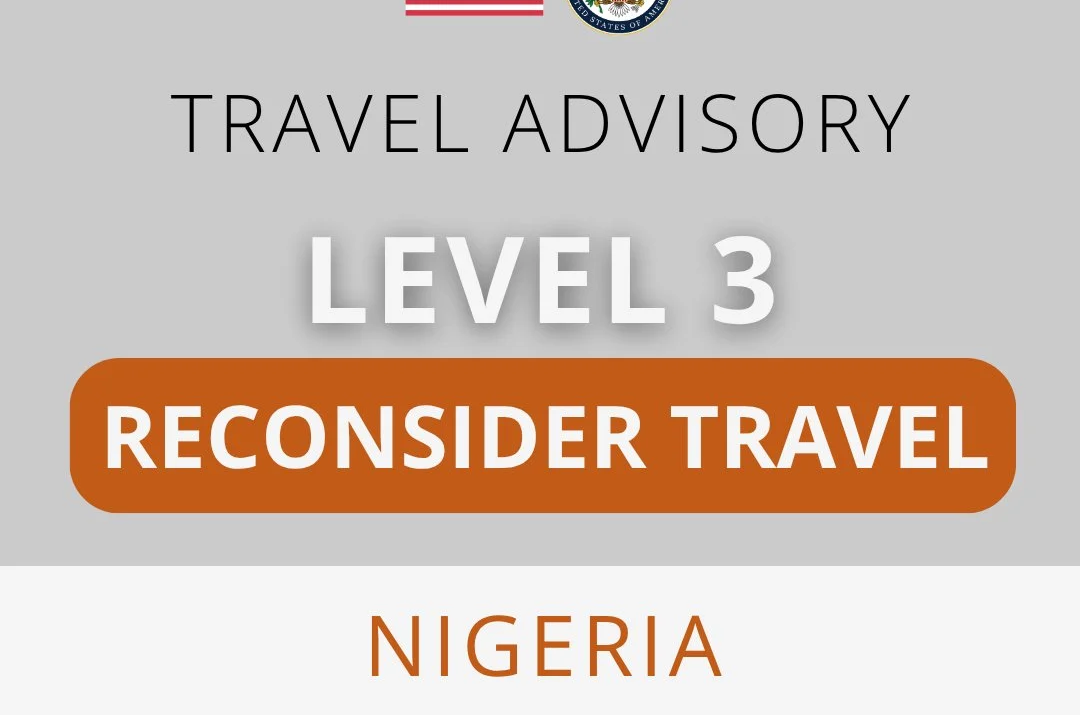
In its updated travel advisory, the department maintained Nigeria at “Level 3: Reconsider Travel,” while designating several states under the stricter “Level 4: Do Not Travel” category, signalling heightened danger for American citizens.
Five additional states, Plateau, Jigawa, Kwara, Niger, and Taraba were newly added to the highest-risk category, bringing the total number of restricted states to 23.
“On April 8, 2026, the Department of State authorized non-emergency U.S. government employees and U.S. government employee family members to leave U.S. Embassy Abuja due to the deteriorating security situation,” the advisory stated.
Northern states including Borno, Yobe, and parts of Adamawa were flagged for terrorism threats, while others such as Kaduna, Kano, Katsina, Sokoto, and Zamfara were cited for widespread unrest, crime, and kidnapping. Authorities warned that security operations in these areas could occur without prior notice.
In the southern and southeastern regions, states like Abia, Anambra, Bayelsa, Delta, Enugu, Imo, and Rivers excluding Port Harcourt were also listed as high-risk zones due to criminal activity, armed gangs, and violent protests.
The advisory highlighted that violent crimes such as armed robbery, carjacking, and kidnapping for ransom remain prevalent nationwide, with foreign nationals, particularly Americans, often targeted due to perceived wealth.
It further warned that terrorist attacks remain a persistent threat in public spaces, including markets, shopping centres, places of worship, and large gatherings.
Concerns over healthcare infrastructure were also raised, with the department noting that medical services in Nigeria are limited and inconsistent, often falling short of international standards.
Despite the warnings, the State Department advised citizens who must travel to Nigeria to enrol in safety programmes, avoid large gatherings, and establish personal emergency protocols, including proof-of-life measures.