
Madumere Says PDP Will Rebuild and Bounce Back, After Dumping APC
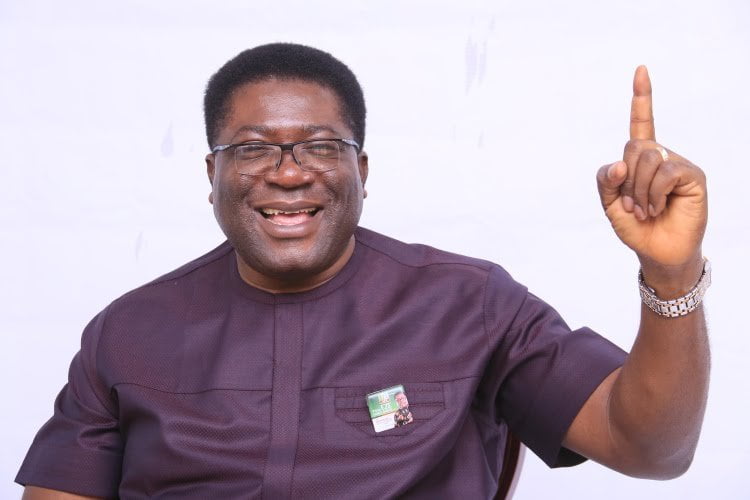
Former Imo State Deputy Governor, Prince Eze Madumere, has defended his decision to leave the ruling All Progressives Congress (APC) for the Peoples Democratic Party (PDP), insisting the move is strategic—not desperate.
After years within the APC, Madumere says his defection is rooted in a broader goal: rebuilding a party many have already written off.
“Politics is dynamic,” he said, explaining that his move was carefully thought out and aligned with his belief in inclusivity and people-focused governance.
He dismissed suggestions that he abandoned certainty for uncertainty, arguing instead that political relevance is not tied to a ruling party alone.
For him, PDP represents an opportunity—not a fallback.
“I am in PDP to join hands with like minds to rebuild the system,” he said, expressing confidence that the party can regain its strength and national relevance.
Madumere’s optimism stands in contrast to the widely held view of the PDP as fragmented and weakened.
But he insists internal divisions are temporary and part of normal political evolution.
“When I decided to join, the least thing I considered were the factions,” he said, adding that reconciliation within the party is already underway.
On the broader political landscape, he rejected fears that Nigeria could slide into a one-party state under the APC, despite the wave of defections into the ruling party.
While acknowledging that such concerns exist, he described them as speculative rather than factual.
“Nigeria will not slide into a one-party state,” he said, urging observers to watch how events unfold.
Madumere also made it clear that electoral success, in his view, is not solely dependent on party structure but on personal credibility and grassroots support.
“The desire to serve my people is continuous… no matter the party, I am confident they will vote for me,” he stated.
Looking ahead to 2027, he struck a cautious tone—neither alarmist nor dismissive—calling for adherence to democratic processes and support for electoral institutions.
He also pushed back against claims of political desperation at the federal level, saying there is no concrete evidence to support such narratives.
On governance in Imo State, Madumere offered a measured assessment, acknowledging some progress in infrastructure while pointing out gaps in areas like rural development and job creation.
Beyond politics, he revealed that he is yet to receive entitlements owed to him despite a court ruling, calling on the state government to act.
His message, ultimately, is one of repositioning.
Not just a defection—but an attempt to re-enter the political conversation with a new strategy.
Whether PDP becomes the vehicle he believes it can be is another matter entirely.