
Uganda Landslide Survivors Take Government to UN Over Relocation, Compensation
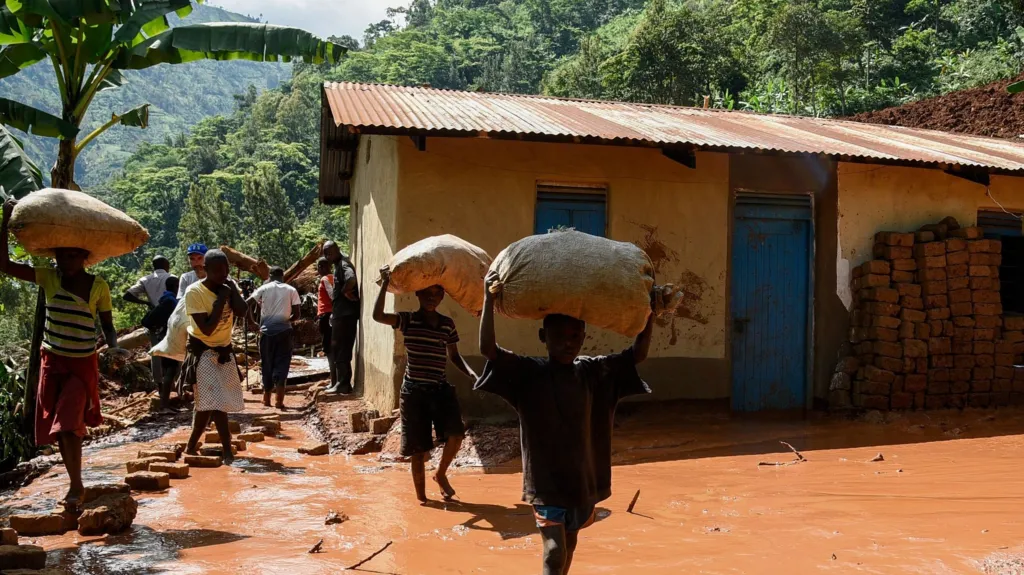
Survivors of a 2019 landslide in eastern Uganda that killed 53 people have taken their case to the United Nations, accusing the government of failing to protect communities living in areas vulnerable to climate-related disasters.
The 48 complainants allege that the government violated Uganda’s Constitution by failing to implement effective disaster management measures in Bududa District, a mountainous region frequently affected by landslides.
The case, now before the United Nations Human Rights Committee, is seeking compensation, safer relocation arrangements and improved protection for communities exposed to environmental hazards.
At least 33 of the 53 people killed in the 2019 disaster were children. Years after the tragedy, survivors say heavy rainfall continues to trigger fears of another landslide.
William Tsama, one of the complainants, said he lost four members of his family in the disaster and hoped the legal action would help other communities facing similar threats.
“My quest should be a lesson,” he said, adding that victims whose governments fail to protect them should be able to seek legal redress.
Uganda introduced a resettlement programme for landslide-prone communities in 2011, but progress has reportedly been limited, with relatively few residents successfully relocated.
Last month, the government launched another resettlement programme offering affected households 18 million Ugandan shillings, approximately $4,300, to support their relocation to safer areas.
Under the arrangement, families can receive two acres of land valued at eight million shillings, alongside 10 million shillings towards constructing a house. Alternatively, they can receive the equivalent land allowance in cash, together with the housing grant.
The programme is expected to benefit 1,410 households identified as living in high-risk locations. However, some survivors have questioned whether the financial support is sufficient to cover relocation and the cost of rebuilding their lives.
The government has also given residents of designated high-risk areas two months, from November to December, to relocate or face forced eviction.
Beyond the immediate threat of landslides, the complainants say changing rainfall patterns and declining soil fertility have affected agricultural activities, making it increasingly difficult for families to sustain their livelihoods.
Tsama said his efforts were motivated by the need to secure a safer future for his children and other members of his community.
“I want to get a new good place for my people, so even if I die, they will be okay. I am an old man, but I am doing it for my children,” he said.
The survivors first initiated legal action in Uganda in 2020 and received support from environmental organisation Greenwatch three years later.
They are seeking compensation for lost family members and livelihoods, alongside emergency measures such as accessible early-warning systems in communities exposed to landslides.
Greenwatch Executive Director Samantha Atukunda Kakuru Mwesigwa said the case was intended to push governments to strengthen their response to climate-related disasters.
She argued that justice should extend beyond compensation to include policies that address the growing risks associated with climate change.
The case also highlights wider climate-related disaster concerns across East Africa. In Kenya, floods and landslides killed at least 181 people between March and May 2024, according to the Kenya Red Cross. Rwanda recorded 135 deaths from floods and landslides in May 2023.
ClientEarth lawyer Vesselina Newman said vulnerable countries were experiencing severe consequences of climate change despite contributing relatively little to global greenhouse gas emissions.
She called on wealthier countries to provide financial assistance to help developing nations implement life-saving adaptation measures.
The complainants insist that relocation must involve more than moving residents away from dangerous areas. They want the government to protect their land rights, livelihoods and individual needs throughout the process.
The United Nations Human Rights Committee is expected to ask the Ugandan government to respond to the complaint within six months. The case could have wider implications for how governments are held accountable for protecting communities from climate-related risks.