
COP31: African Activists Warn Climate Transition Could Deepen Inequality
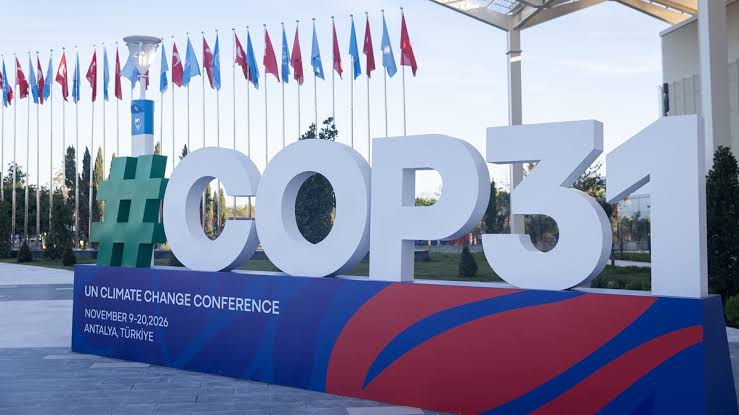
African civil society activists have warned that proposed approaches to a just energy transition at the ongoing 31st United Nations Climate Change Conference (COP31) in Türkiye could deepen existing inequalities and exclude communities already suffering the effects of climate change.
The activists raised concerns about the language contained in an initial draft of the conference’s proposed cover decision, arguing that the transition from fossil fuels to cleaner energy must address more than reducing carbon emissions.
They said climate policies should also account for historical environmental damage, loss of livelihoods, land rights and the disproportionate impact of climate change on women and vulnerable communities.
The concerns were raised during discussions on the sidelines of the conference on Tuesday, November 17. Some African climate campaigners also staged demonstrations around the conference venue, using placards and chants to challenge aspects of the proposed global energy transition framework.
They questioned a proposed global electrification target, warning that its current formulation could allow countries to expand electricity generation from fossil fuels while claiming progress towards cleaner energy.
Emem Okon, Executive Director of Kebetkache Women Development, said a just transition must address gender inequality and recognise the experiences of women, persons with disabilities and communities affected by extractive activities.
She questioned whether the transition would correct existing inequalities or reproduce them under a different economic arrangement.
Okon also raised concerns about communities being excluded from decisions involving the transfer of oil and gas assets to local companies, particularly in Nigeria. She questioned whether host communities were consulted during such transactions and who would take responsibility for environmental liabilities accumulated over decades of extraction.
She argued that changing the ownership or names of companies does not automatically address pollution and environmental damage suffered by host communities.
The activist further called for women’s land rights and livelihoods to be considered in the design of renewable energy and other development projects. She warned that large-scale projects could reproduce the same patterns of environmental destruction and displacement associated with fossil fuel extraction.
Okon also called for greater participation of grassroots women in climate negotiations and better access to climate finance. She questioned whether funding mechanisms, including the Loss and Damage Fund and the Adaptation Fund, would adequately support communities dealing with environmental pollution, health complications and other losses.
She cited research conducted in Otuo and concerns raised by women in Bille, Rivers State, about possible hydrocarbon contamination. These concerns, she said, highlighted the need for climate policies to address the health and livelihood consequences of environmental degradation.
Similarly, Ken Henshaw, Executive Director of WeThePeople, argued that discussions about energy transition must include measures to repair the damage caused by decades of fossil fuel extraction.
He said oil production in the Niger Delta had polluted farmland and waterways, destroyed livelihoods and left communities facing long-term environmental consequences.
Henshaw claimed that environmental restoration in some affected areas could cost up to $50 billion, while remediation could take as long as 50 years. He also cited a life expectancy figure of 41 years for the Niger Delta, although the report did not provide supporting research for the statistic.
He argued that replacing fossil fuels with renewable energy would not amount to a just transition if historical pollution and its effects on affected communities remained unaddressed.
Henshaw also criticised climate financing arrangements that require African countries to preserve forests as carbon sinks, warning that such policies could restrict local communities’ access to land and natural resources.
Citing Cross River State, he expressed concern that forest conservation arrangements could reproduce unequal economic relationships if local communities were excluded from decisions about their resources.
He also questioned the framing of the blue economy as a new development model, arguing that coastal and riverine communities had long depended on fishing, transportation and other activities linked to their waterways.
Henshaw called for climate negotiations to prioritise actual emissions reductions, arguing that reducing fossil fuel consumption must remain central to addressing the climate crisis.
The Ogeloyinbo of Aiyetoro Community in Ondo State, Oba Olaoluwambe Ojagbowumi, also called for affected communities to be consulted during the planning and implementation of environmental projects.
He criticised previous interventions aimed at addressing coastal erosion in Aiyetoro, saying projects awarded over the years had failed to protect the community.
The traditional ruler cited a contract reportedly awarded in 2003 for N1.6 billion and re-awarded by the Niger Delta Development Commission in 2009 for N6.5 billion. He said the projects were abandoned after contractors failed to incorporate local knowledge into their plans.
According to him, engineers insisted on sourcing sand for coastal reclamation despite residents’ advice that locally available mud and boulders could be used to protect the shoreline.
Ojagbowumi said about 80 per cent of Aiyetoro’s houses and land had been lost to coastal erosion, alongside industries, historical structures and other community assets.
He added that the community’s palace was among the few major structures still standing, although it was now surrounded by water. The mixing of seawater with river water had also affected residents’ access to safe drinking water, he said.
The activists and community representatives called for a just transition framework that places affected people at the centre of climate decisions, protects their rights and addresses the environmental damage left by decades of extraction.
They maintained that climate policies would remain inadequate if communities bearing the greatest consequences of environmental degradation were excluded from shaping the solutions.