
Ukraine Communities Develop Veteran Reintegration Plans for Veterans With EU, UNDP Support
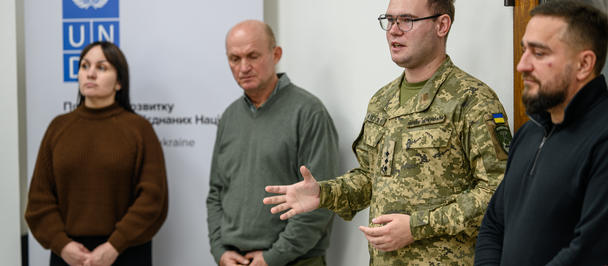
Communities across eight Ukrainian oblasts have completed 24 strategic planning sessions aimed at improving the reintegration of veterans and strengthening local support systems for those returning to civilian life.
The sessions were organised under EU4Recovery, a partnership between the European Union and the United Nations Development Programme (UNDP), co-funded by Sweden and supported by Denmark. The initiative forms part of UNDP’s Area-Based Recovery approach, which focuses on helping communities build stronger local services and institutions.
The planning sessions were held across the Sumy, Kharkiv, Chernihiv, Poltava, Dnipropetrovsk, Kherson, Zaporizhzhia and Mykolaiv oblasts. They brought together local government officials, veteran support specialists, veterans, families of people who died, remain missing or are held in captivity, civil society groups and professionals working in healthcare, social services and legal support.
A total of 675 people participated in the sessions. Their discussions focused on creating local programmes that can provide veterans and their families with more coordinated access to essential services rather than forcing them to navigate separate institutions on their own.
The proposed plans also seek to improve cooperation among local governments, Territorial Centres for Recruitment and Social Support, Administrative Service Centres, healthcare facilities, employment services, social service providers and civil society organisations.
The organisers said the resulting action plans are intended to help communities move away from fragmented assistance towards integrated reintegration systems. Under the proposed approach, local institutions would coordinate their services so veterans and their families can receive support with fewer administrative and practical barriers.
Henrik Huitfeldt, Acting Head of Cooperation at the EU Delegation to Ukraine, stressed that veterans should play a central role in shaping the programmes designed to support them. “Their reintegration should be developed with veterans, not simply for them,” he said, adding that EU-backed initiatives support veterans returning to civilian life, participating in community decisions, starting businesses and finding employment.
Based on the discussions, participating communities identified a number of priority actions to be implemented by the end of 2028. The plans are expected to guide future local efforts to strengthen veteran services and improve coordination among the institutions responsible for supporting veterans and their families.