
Falana Urges Nigeria to Sanction South African Companies Over Xenophobic Attacks on Nigerians
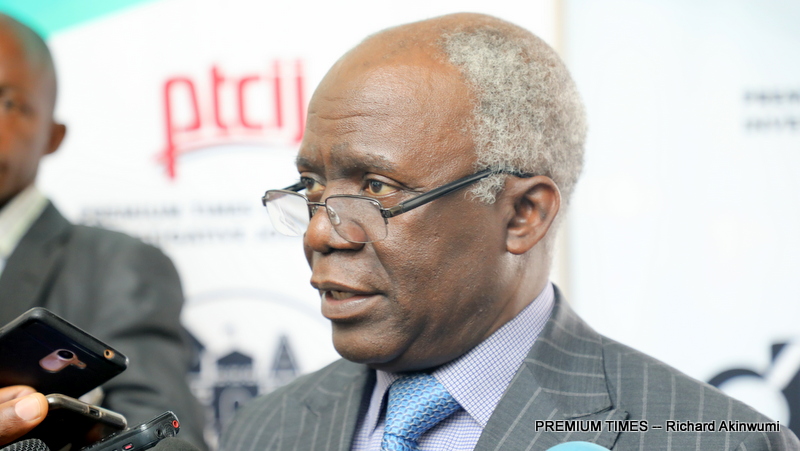
Growing outrage over repeated xenophobic attacks on Nigerians in South Africa has prompted senior human rights lawyer Femi Falana (SAN) to call for tougher action, urging the Federal Government to impose economic sanctions on South African companies operating in Nigeria.
Speaking with journalists on Saturday in Ilawe-Ekiti, Ekiti State, after a reception held in honour of the late Alawe of Ilawe-Ekiti, Oba Adebanji Alabi, Falana argued that diplomatic protests alone have failed to stop the recurring violence and destruction of Nigerian-owned businesses in South Africa.
The senior advocate said Nigeria should embrace the principle of reciprocity in international relations, insisting that stronger economic measures would send a clear message to the South African government. While acknowledging the Federal Government’s decision to petition the African Union, he warned that such efforts could end with resolutions that lack meaningful enforcement.
“The Federal Government will have to employ diplomatic action, but beyond that, it should also adopt economic measures against South African companies operating in Nigeria,” Falana said.
He suggested that Nigerians should consider switching from MTN to other telecommunications providers where alternatives exist, arguing that consumer action could increase pressure on South African interests. Falana also recalled Nigeria’s stance against apartheid in the 1970s, when the country nationalised British Petroleum, saying similar steps against South African investments should remain an option if the situation persists.
Beyond economic retaliation, Falana called for stronger legal protections for Nigerians across Africa. He noted that although the African Court on Human and Peoples’ Rights, based in Arusha, Tanzania, exists to address human rights violations, Nigeria has yet to complete the legal process that would allow its citizens to file cases directly before the court.
According to him, if Nigerians had access to the continental court, victims of xenophobic attacks could challenge South Africa over alleged human rights violations. He urged the Federal Government to immediately deposit the required legal instruments that would grant Nigerians direct access to the court, similar to the rights they already enjoy before the ECOWAS Court.
Falana maintained that victims of serious human rights abuses across Africa deserve an effective legal pathway to seek justice, stressing that Nigeria must combine diplomacy, economic leverage and legal reforms to better protect its citizens abroad.