
FA Set to Withdraw Support for FIFA President Gianni Infantino as UEFA Threatens Legal Action
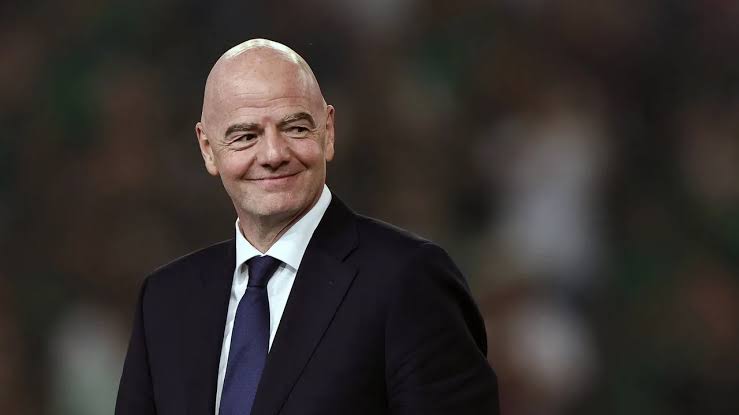
Pressure is mounting on FIFA president Gianni Infantino after the English Football Association (FA) moved to withdraw its support for his leadership, deepening a growing crisis sparked by controversial plans to sell stakes in FIFA competitions to private investors.
The move follows strong opposition from UEFA and Concacaf over the now-abandoned proposal to create a commercial subsidiary, FIFA Forward Enterprise (FFE), which would have allowed external investors to acquire minority stakes in the organisation’s flagship tournaments, including the FIFA World Cup.
According to reports, the FA is preparing to formally notify Infantino of its decision ahead of next year’s FIFA presidential election, where the 56-year-old is expected to seek a fourth and final term. To retain the presidency, Infantino will require the backing of at least 106 of FIFA’s 211 member associations.
The backlash has intensified after UEFA revealed it is considering legal action over the proposed investment structure. In a letter sent to FIFA, Europe’s football governing body demanded that all documents and electronic communications related to the FFE project be preserved, warning that it could pursue legal, arbitration or regulatory proceedings.
UEFA also requested that FIFA retain emails, instant messages, meeting notes and correspondence involving officials, member associations, broadcasters, sponsors and financial institutions connected to the proposed investment plan. The governing body asked Infantino to confirm within five working days that relevant records would be preserved.
The controversial proposal reportedly included a promise that FIFA’s member associations would receive $40 million if they supported the initiative, with an initial $20 million available before a September 19 deadline. The proposed investor group was expected to be led by Thrive Capital, an American venture capital firm founded by Joshua Kushner.
Speaking on BBC Radio 5 Live, UEFA vice-president Laura McAllister described the governance process surrounding the proposal as “abysmal,” saying football authorities must ensure stronger accountability in future decision-making.
“We cannot keep putting out fires because of unilateral plans,” McAllister said, expressing hope that the leadership of world football would change after next year’s election.
Support for Infantino has also weakened elsewhere. Wales, Serbia and Finland have withdrawn their backing, while Scotland’s Football Association is understood to remain aligned with UEFA’s position. However, several countries, including Qatar, Lebanon, Kuwait and Sri Lanka, have reaffirmed their support for the FIFA president.
Attention is also shifting to the 37-member FIFA Council, where at least 19 members would need to request an emergency meeting to consider forcing Infantino to resign before the election. While UEFA and its allies continue to build opposition, observers say the FIFA president still enjoys significant backing outside Europe, making any leadership challenge far from certain.
Latest Video
Barça Can't Stop Scoring! Real Madrid's €135M Diomande Selection Problem
Follow OtownGist Sports
Get the latest stories, videos and conversations directly on the platforms you use.