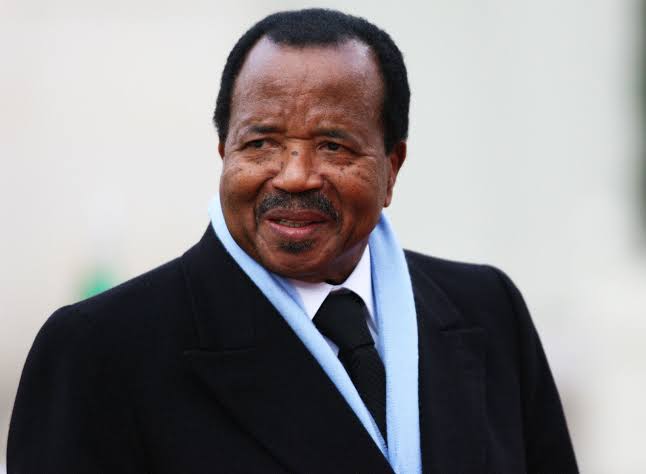

Cameroon’s President Paul Biya has approved a fresh military reshuffle while remaining outside the country for nearly two months, a move that has intensified debate over his prolonged stay in Switzerland and renewed questions about the leadership of the Central African nation.
The 93-year-old leader, who left Cameroon on June 7 for what officials described as a “brief private stay” in Geneva, signed a series of decrees on Monday appointing senior military officers to key positions and promoting five colonels to the rank of brigadier general.
Among the appointments was Raymond Jean Charles Beko’o Abondo, who was promoted to brigadier general and immediately reappointed as commander of the elite Presidential Guard, the unit responsible for protecting Biya. Abondo has led the guard since 2013.
Although military reshuffles are not uncommon under Biya’s administration, the latest changes have drawn heightened attention because they come amid growing public concern over the president’s continued absence from Cameroon. Similar security shake-ups followed the 2023 coup in neighbouring Gabon and were also carried out before last year’s presidential election.
Biya has continued to exercise presidential powers from Switzerland, signing official decrees, including approvals for international loan agreements. However, his extended stay abroad has fuelled speculation about his health and his ability to govern, despite repeated assurances from the government that he remains in good condition.
Cameroon’s Minister of Communication, René Emmanuel Sadi, recently told French broadcaster RFI that the president is alive, carrying out his constitutional duties from Geneva and will return home soon. He also rejected opposition claims that Biya’s absence has created a leadership vacuum.
Critics remain unconvinced. Mamadou Mota, vice-president of the opposition Cameroon Renaissance Movement (CRM), argued that executive authority should be exercised within the country, describing the president’s prolonged absence as creating a significant institutional gap.
Paul Biya, Africa’s oldest serving head of state, has governed Cameroon since 1982. His long tenure has frequently attracted criticism over governance, transparency and succession, with renewed scrutiny following his latest military appointments and the continued uncertainty surrounding his return.