
Peter Obi’s Exit Left South-East ‘Disadvantaged and Confused’ – Kenneth Okonkwo
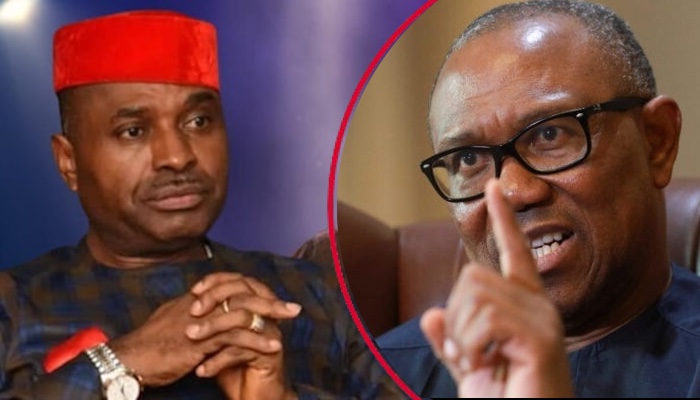
Former presidential spokesperson and politician Kenneth Okonkwo has said Peter Obi’s departure from the African Democratic Congress (ADC) left the South-East politically disadvantaged ahead of the party’s presidential ticket calculations.
Okonkwo made the remarks on Thursday during an appearance on Channels Television’s Morning Brief, where he discussed developments within the opposition party following the emergence of Atiku Abubakar as its presidential candidate.
Responding to questions about why former Minister of Transportation Rotimi Amaechi has yet to publicly acknowledge his vice-presidential nomination on social media, Okonkwo said the party’s internal dynamics changed significantly after Obi exited the race before the completion of the presidential primary process.
According to him, the South-East had been represented in the party’s political calculations before Obi’s withdrawal, but his exit created uncertainty over the region’s place in the ticket arrangement.
“The person that represented the South-East in that calculation left unceremoniously before the conclusion of the process. That left the South-East disadvantaged and confused,” Okonkwo said.
He explained that Obi’s departure effectively created a vacancy that could not easily be filled because of provisions in Nigeria’s Electoral Act governing eligibility for vice-presidential nominations.
Okonkwo noted that although prominent personalities, including Senator Enyinnaya Abaribe and former World Bank Managing Director Dr. Ngozi Okonjo-Iweala, were mentioned as possible options, they were not eligible because they were not members of the ADC within the legally required timeframe.
“Immediately Peter Obi exited, it was as if that position that would have been given to the South-East was vacant. Some beautiful names were dropped… but those names were no longer members of ADC,” he added.
Under the Electoral Act, political parties are required to nominate running mates from among eligible party members within stipulated timelines before the conclusion of the nomination process. Okonkwo argued that the legal requirement limited the party’s options after Obi’s exit.
His comments come amid ongoing political realignments and discussions over regional representation as parties begin positioning themselves ahead of the 2027 general elections.