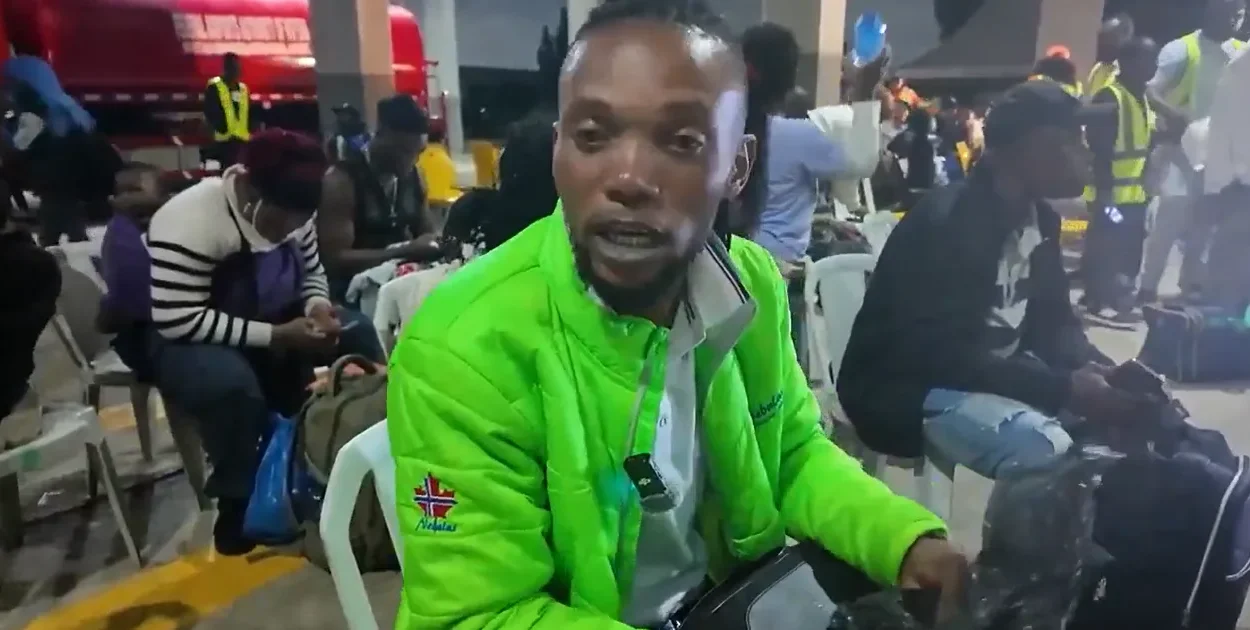
A Nigerian returnee, Okafor Ugochukwu, has shared the painful story of how repeated xenophobic attacks in South Africa forced him to abandon everything he owned, including his businesses and home, before returning to Nigeria without his two daughters.
The Anambra State indigene told Vanguard that he left Nigeria in 2014 in search of better opportunities. After spending time in Tanzania and Mozambique, he eventually settled in Johannesburg, where he built a successful clothing business and lived for about a decade.
Ugochukwu said he had initially planned to return to Nigeria in 2017 but was unable to travel because of passport-related immigration issues. When his flight ticket expired, he invested the remaining money into expanding his business instead.
His fortunes changed in 2018 when xenophobic violence targeting foreign nationals swept through parts of South Africa, destroying his boutique and wiping out his investment. With financial support from relatives in Nigeria, he started over by selling earphones, hair products and other accessories.
According to him, another wave of attacks later reduced his new business to ruins. He said the latest incident left him with no option but to flee for his life.
“They came to my place. They burnt my place and destroyed my business. I lost everything. I had no choice but to run because my life is very important,” he said.
The businessman revealed that he escaped without any belongings, leaving behind his house, business and personal property. He also disclosed that his two daughters remain in South Africa, describing the decision to leave them behind as the most heartbreaking part of his ordeal.
“I left my place without anything. I left broke. My house and everything were destroyed. I’m stranded. I’m homeless. I’m down,” he said, adding, “I do have two girls back there. I’m so sorry and disappointed.”
Ugochukwu explained that he sought refuge at the Nigerian Consulate in Pretoria after escaping the violence, where he stayed for several days before arrangements were made for his evacuation to Nigeria. He thanked the Federal Government for facilitating his return, saying he was grateful to be alive despite losing everything.
Reflecting on the hostility faced by many foreigners, he said some South Africans wrongly believe Nigerians are responsible for unemployment and crime in the country. He also rejected the stereotype that Nigerians in South Africa are predominantly involved in drug trafficking or other criminal activities.
“Most Nigerians there have their own businesses. We are there to survive and make an honest living,” he said.
Now back in Nigeria, Ugochukwu appealed for government support to help returnees rebuild their lives, expressing hope that he would recover from the devastating losses and start afresh.