
The Trade Union Congress (TUC) has warned that the price of Premium Motor Spirit (PMS) could rise to as high as ₦2,000 per litre if urgent steps are not taken to address rising global crude oil prices and the continued depreciation of the naira.
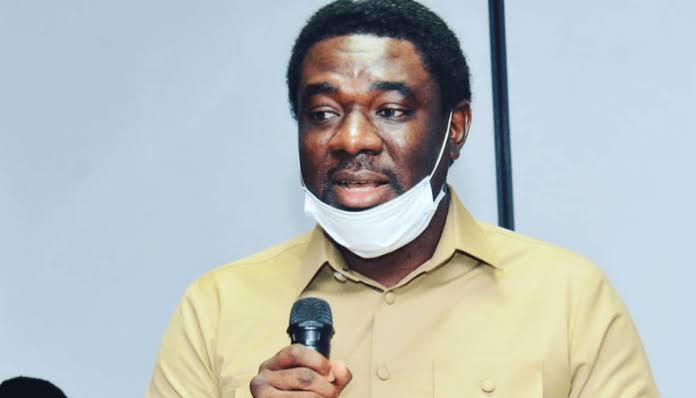
Speaking at a briefing in Abuja on the state of the nation as it affects workers, the TUC President, Festus Osifo, said Nigerian workers are already under severe economic pressure as fuel prices continue to climb across the country.
He noted that the ripple effects of rising petrol and diesel costs are already being felt across transportation, manufacturing, and the wider economy, warning that inflation which had recently shown signs of slowing could reverse its downward trend if the situation persists.
According to him, petrol prices in some parts of the country are already approaching ₦2,000 per litre, while diesel costs are also rising, increasing production expenses for businesses and pushing up the prices of goods and services.
Osifo warned that if unchecked, Nigeria’s inflation rate could begin to rise again, eroding recent economic gains.
To address the situation, the TUC proposed that the Federal Government immediately deploy 60 percent of excess crude oil revenue above the 2026 budget benchmark to subsidise crude feedstock supplied to local refineries, including the Dangote Refinery and modular refineries.
He explained that with international crude prices hovering around $100 per barrel above the budget benchmark of $64.85, Nigeria is currently generating excess revenue that could be redirected to cushion fuel costs.
Osifo argued that subsidising crude at the production level would be more transparent and less prone to abuse than the former downstream fuel subsidy system, adding that it could reduce pump prices of petrol, diesel, and aviation fuel within one to two weeks.
“If this continues unchecked, the inflation that we are currently celebrating as going downwards will reverse and start moving up again,” he said.
He also attributed rising fuel costs to the continued depreciation of the naira, arguing that a stronger exchange rate would significantly reduce pump prices and ease inflationary pressure on households.
Beyond economic concerns, Osifo also condemned Nigeria’s worsening security situation, describing recent killings across the country as unacceptable and urging the Federal Government to invest in modern military technology and intelligence equipment.
He stressed that national development cannot occur without security, calling for urgent prioritisation of defence spending alongside economic reforms.
The TUC president also criticised the slow rollout of Compressed Natural Gas (CNG) infrastructure, saying the government’s plan to deploy CNG buses would not provide immediate relief due to the lack of refuelling stations along major transport routes.
The union said it would formally communicate its proposal to the Office of the Secretary to the Government of the Federation for immediate consideration by President Bola Tinubu.