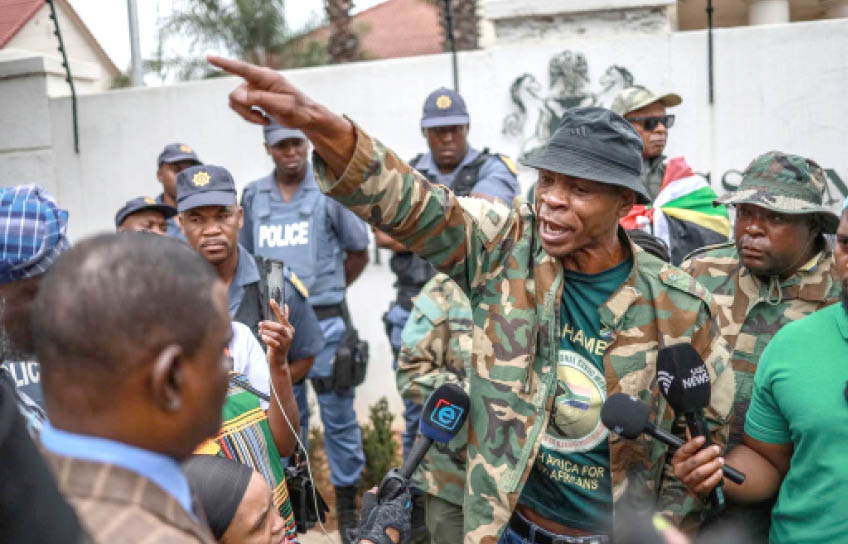

Civil Society Organisations (CSOs), including members of the Progressive Forces of South Africa, staged a protest outside the Nigerian High Commission in Pretoria following the controversial installation of an Igbo leader in KuGompo, Eastern Cape.
The installation of Solomon Ogbonna Eziko as “Igwe Ndigbo” on March 24, 2026, sparked unrest among local South Africans, who described the event as disrespectful to local laws and traditions. Protesters reportedly burned vehicles and buildings alleged to be owned by foreign nationals.
Some demonstrators accused members of the Nigerian community of engaging in drugs, human trafficking, and other criminal activities, calling on the High Commission to regulate Nigerians residing in the country.
Responding, the Nigerian High Commission clarified that the federal government was not involved in the installation, which is a cultural and traditional title meant to preserve Igbo heritage abroad. Acting High Commissioner Temitope Ajayi apologised to South African traditional authorities, assuring that Nigeria respects local laws and sovereignty.
Bola Babarinde, former APC chairman in South Africa, said the unrest stemmed from broader concerns about the conduct of some Nigerians, not solely the Igbo king’s installation. He urged the National Orientation Agency (NOA) to improve Nigerians’ conduct abroad.
Frank Onyekwelu, president of the Nigerian Citizens Association South Africa (NICASA), explained that the Igwe Ndigbo title is strictly ceremonial, intended to promote unity and cultural identity among the Igbo diaspora. He condemned the destruction of property during protests and called for peaceful conduct among Nigerians in South Africa.
The Nigerian High Commission issued a 10-point advisory, urging Nigerians to suspend socio-cultural activities, avoid inflammatory statements, maintain a low profile, and respect local laws amid tensions.
This controversy mirrors a similar incident in Ghana in 2025, when Eze Chukwudi Ihenetu was installed as Igbo king in Accra, provoking public protests over perceived foreign influence on local governance.
The High Commission continues to engage with South African authorities to resolve the matter peacefully and prevent further escalation.