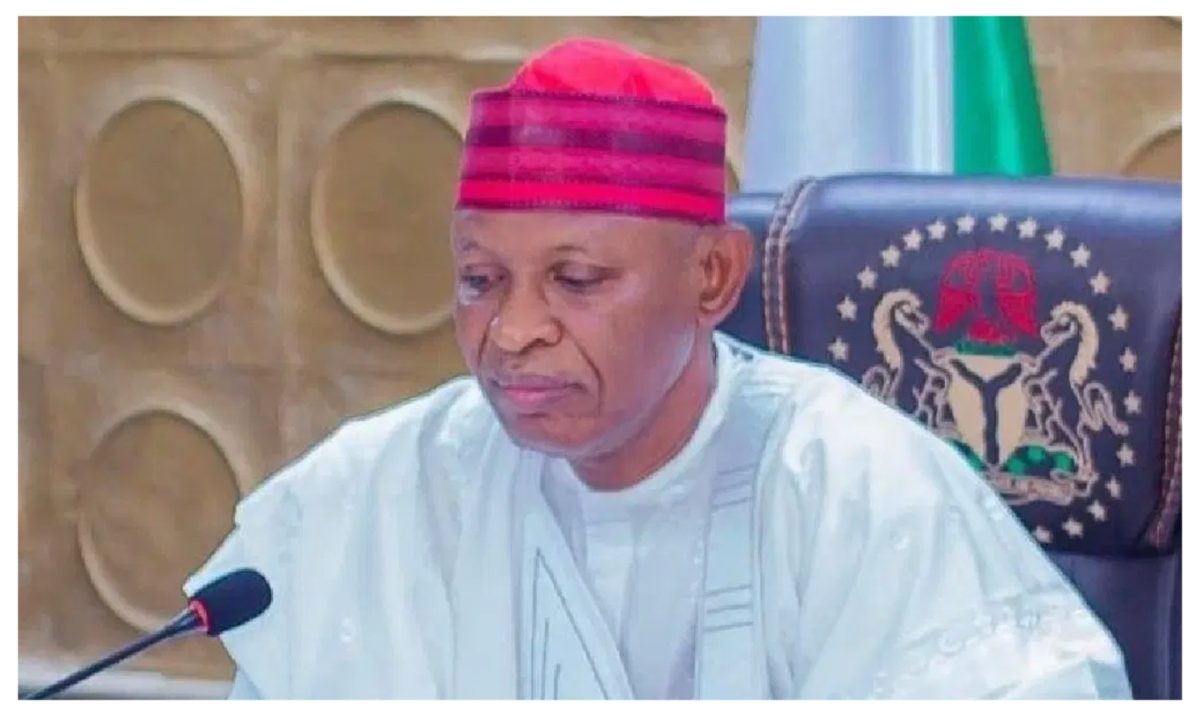

Kano State Governor Abba Yusuf has stirred fresh political debate after openly addressing a viral slogan suggesting he would only serve one term in office.
In a video circulating online, the governor pushed back against the Hausa slogan “Falle Daya” (One Term), offering his own interpretation—and a clear political signal about his future.
“Actually, it is only one term in the NNPP party. We will do the second term in the APC,” Yusuf said, indicating that while he accepts the “one term” narrative, it would apply only to his time in the New Nigeria Peoples Party.
The statement confirms what many political observers had already suspected—that Yusuf’s recent defection to the All Progressives Congress (APC) is not just a strategic move for the present, but part of a longer-term plan to retain power.
He also took a swipe at the African Democratic Congress (ADC), dismissing its chances entirely. “As for the ADC party that they have returned to, it will not even do one term, not ever,” he added.
Yusuf’s remarks come shortly after his high-profile exit from the NNPP, a party he rode to power in Kano, following a prolonged political crisis with his former ally and political godfather, Rabiu Kwankwaso.
The fallout between both men had exposed deep fractures within the NNPP, eventually leading to Yusuf’s resignation from the party amid what he described as “deepening internal crises” and unresolved leadership disputes.
His move to the APC was framed as a decision made “in the best interest of the people of Kano State,” but critics argue it reflects a broader realignment ahead of the 2027 elections.
The governor’s latest comments now make that realignment explicit.
What was once political speculation is now a declared strategy—win one term under one party, secure another under a more dominant platform.
The risk, however, is clear.
Such moves may strengthen political positioning at the top, but they also raise questions about party loyalty, voter trust, and whether governance is being shaped more by strategy than stability.
For Kano voters, the message is simple—but loaded: the first term may be done, but the political game is far from over.