
Bishop Sparks Controversy After Calling for Parts of the Bible to Be Removed and Proposing “Third Testament”
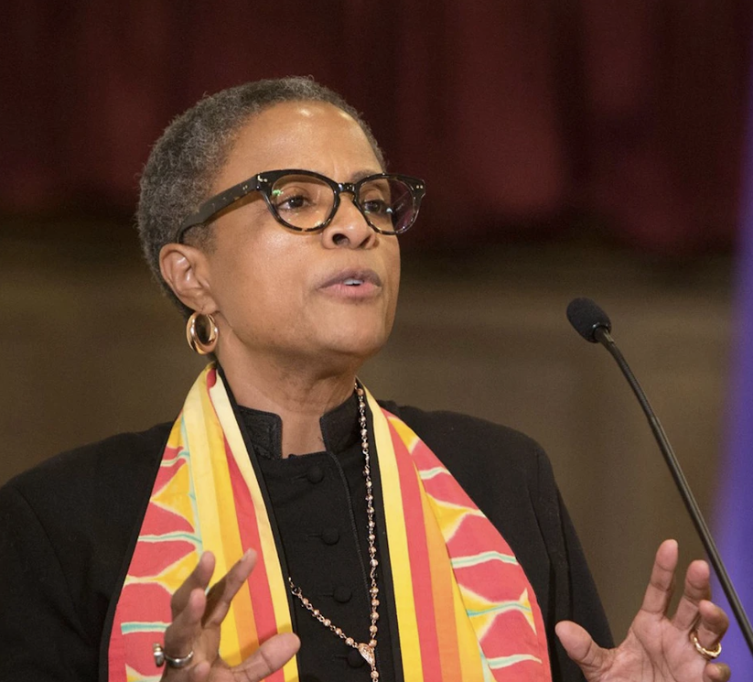
A senior bishop has triggered widespread debate after suggesting that certain passages in the Bible should be removed, arguing that parts of both the Old and New Testaments are difficult to reconcile with modern society.
Yvette Flunder, senior pastor of the City of Refuge United Church of Christ and Presiding Bishop of The Fellowship of Affirming Ministries, made the remarks during a recent address organised by the Center for Public Theology & Public Policy.
In her message, Flunder said some biblical texts present ongoing challenges in interpretation and application, especially in contemporary discussions around faith, morality, and social values.
She went further to propose what she described as a “Third Testament,” arguing that existing scriptures do not fully reflect her understanding of God and modern spiritual realities.
According to her, the New Testament should not be viewed as the direct word of God, but rather as human reflections and interpretations about God a position she acknowledged would be controversial among Christians.
Flunder pointed to specific biblical passages that address slavery and women in the church, saying such texts continue to generate tension and debate within religious communities.
She argued that simply accepting all scripture without scrutiny because it is “in the book” limits deeper theological reflection, insisting that some sections require critical reassessment.
The cleric maintained that her stance does not contradict her faith, stressing that she continues to hold a personal and active relationship with God despite her concerns about certain biblical writings.
She said parts of scripture, in her view, reflect ideas of God that are difficult to align with modern understanding, adding that this tension is what fuels her call for reinterpretation.
Flunder stated: “The New Testament is not the word of God. It is words about God,” a remark that has since generated strong reactions across religious and online communities.
Her comments have reignited long-standing debates within Christianity over biblical interpretation, authority, and how sacred texts should be understood in a changing world.