
ADC Amends Constitution as David Mark Takes Charge, Expels Members and Slams INEC

A decisive shift in Nigeria’s opposition politics unfolded in Abuja as the African Democratic Congress (ADC) amended its constitution and reshaped its leadership structure amid deepening internal tensions ahead of the 2027 elections.
Delegates at the party’s national convention overwhelmingly backed the constitutional amendment, with 1,471 out of 1,576 accredited voters approving the changes—an emphatic 94 per cent majority. The result was announced by Emeka Ihedioha, who chaired the electoral sub-committee.
The outcome formally confirmed the restructuring of the party, including the dissolution of the Chief Ralph Nwosu-led National Working Committee and the emergence of a new leadership under David Mark, who now assumes full control of party affairs.
Key resolutions ratified at the convention include the suspension of zoning arrangements for executive positions and relaxed membership requirements, moves seen as strategic efforts to consolidate power and broaden participation within the party.
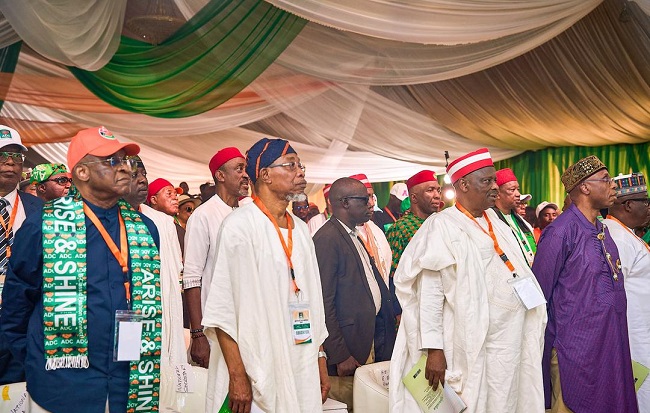
However, the convention also exposed internal cracks, as the ADC announced the expulsion of several members, including factional chairman Nafiu Bala and lawmaker Leke Abejide, over alleged anti-party activities and attempts to destabilise the party.
The gathering quickly evolved beyond internal restructuring into a platform for sharp political criticism. Former Vice President Atiku Abubakar accused the Independent National Electoral Commission (INEC) of undermining democracy, directly criticising its chairman and warning of a broader struggle to defend democratic institutions.
Adding to the pressure, Peter Obi warned that Nigeria’s rising debt profile signals a looming economic crisis, arguing that increased borrowing despite subsidy removal points to deeper structural failures.

Security concerns also took centre stage, with Rotimi Amaechi likening the situation in parts of the country to civil war conditions, while Rauf Aregbesola dismissed the government’s “Renewed Hope” agenda as ineffective, calling for accountability over worsening hardship.
Despite the strong turnout and bold decisions, the convention remains overshadowed by a legitimacy crisis. INEC had earlier withdrawn recognition of the Mark-led faction following a court ruling, leaving the party split into multiple factions competing for control.
The ADC’s internal battle is now unfolding alongside its broader ambition to challenge for power in 2027, with Mark describing the convention as the starting point of the party’s journey to the presidency.