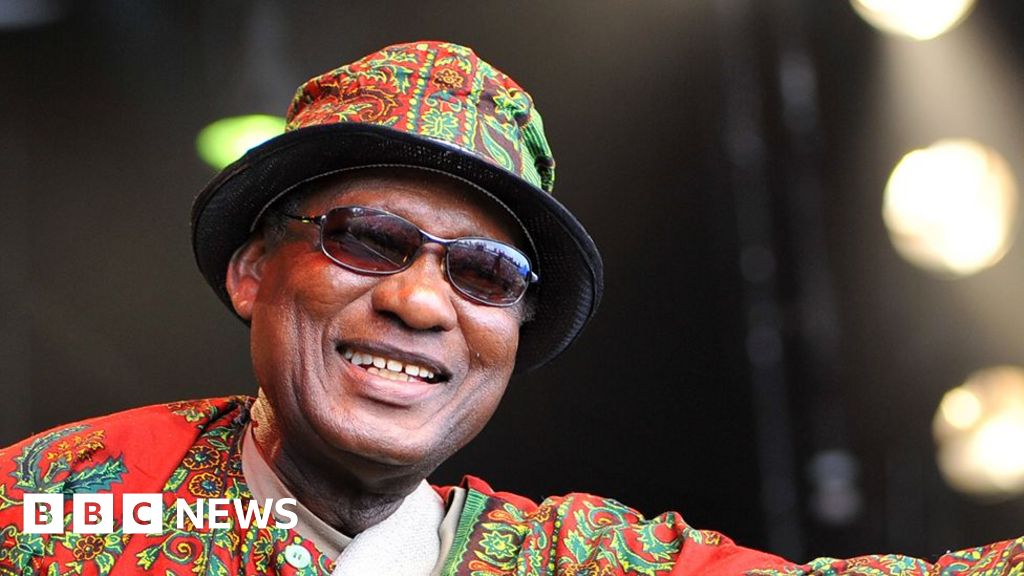

Tributes continue to pour in for Ghanaian highlife legend Ebo Taylor, who passed away on Saturday at the age of 90, just a month after celebrating his milestone birthday and a day after the launch of a music festival named in his honour in Accra.
A guitarist, composer, and bandleader, Taylor’s career spanned six decades, during which he played a pivotal role in shaping modern popular music in West Africa. Often hailed as one of the founding fathers of contemporary highlife, his music influenced generations of African and global artists.
“The world has lost a giant. A colossus of African music. Your light will never fade,” read a tribute on his official page.
International artists including the Los Angeles-based collective Jazz Is Dead, Ghanaian dancehall star Stonebwoy, and American producer Adrian Younge paid homage to Taylor’s legacy. Nigerian poet Dami Ajayi described him as a “highlife maestro” and “fantastic guitarist.”
Born Deroy Taylor in Cape Coast in 1936, he began performing in the 1950s as highlife became Ghana’s dominant sound post-independence. Renowned for intricate guitar lines and rich horn arrangements, he played with leading bands such as the Stargazers and the Broadway Dance Band.
In the early 1960s, Taylor moved to London, where he collaborated with other African musicians, including Nigerian Afrobeat pioneer Fela Kuti. Their exchange of ideas contributed to the development of Afrobeat, blending highlife with funk, jazz, and soul.
Returning to Ghana, Taylor became a sought-after arranger and producer, working with stars such as Pat Thomas and CK Mann, while leading his own bands. His compositions, including “Love & Death”, “Heaven”, “Odofo Nyi Akyiri Biara”, and “Appia Kwa Bridge”, later gained renewed international attention, with DJs and record labels reissuing his works. His grooves were sampled by hip-hop and R&B artists, introducing highlife to global audiences.
Taylor continued performing into his 70s and 80s, touring Europe and the United States, and mentoring younger musicians. Affectionately called “Uncle Ebo” by fans, he remained a symbol of highlife’s golden era and Ghana’s musical influence worldwide.