
IMSU Graduates Seeking Canada: What Certificate Restrictions Mean for Students and Who Should Worry
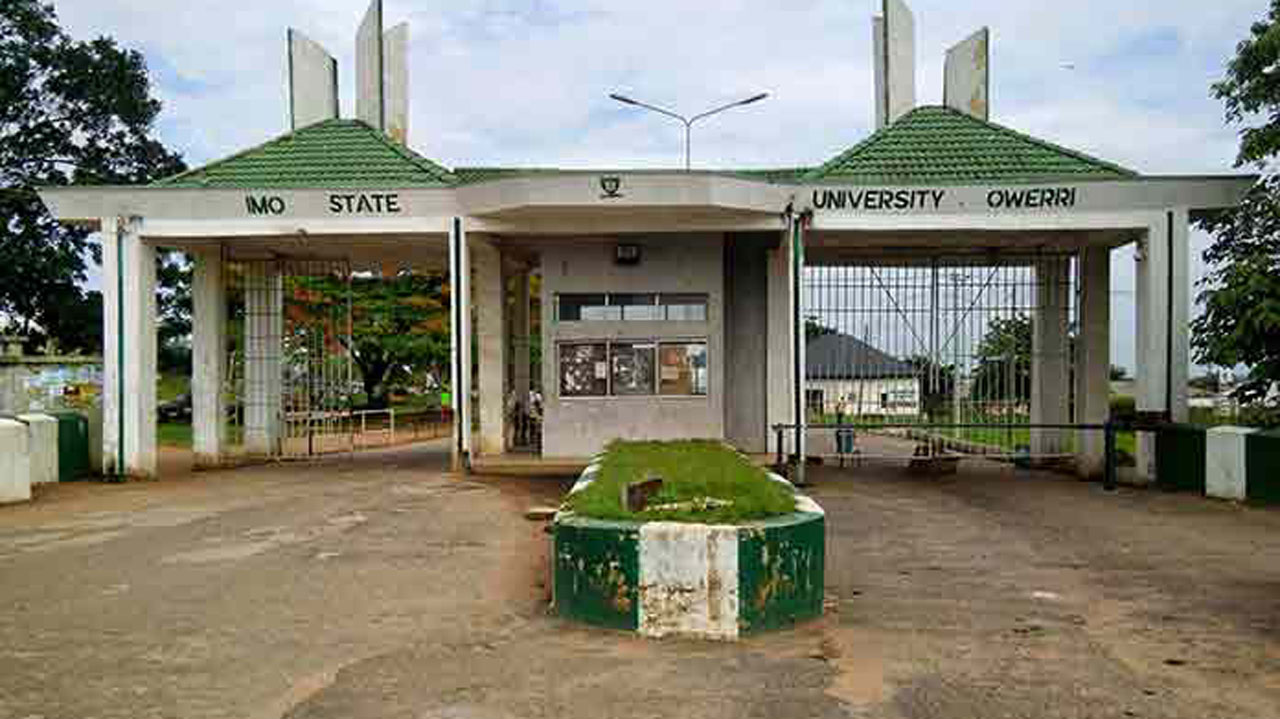
Graduates of Imo State University (IMSU) seeking opportunities in Canada could face fresh challenges after a Canadian credential assessment agency stopped accepting academic documents from the institution and three other Nigerian universities.
The development has raised concerns among current students, graduates and Nigerians planning to relocate to Canada for further studies, employment or immigration.
The affected universities are Imo State University (IMSU), the Federal University of Technology, Owerri (FUTO), Enugu State University of Science and Technology (ESUT) and the University of Benin (UNIBEN).
The International Credential Assessment Service of Canada (ICAS) announced that it was no longer accepting applications involving studies completed at the four institutions.
In a notice to applicants, the agency stated that documents submitted for qualifications obtained from the affected universities would not be included in its assessment reports.
ICAS is one of the organisations designated by Canada’s Immigration, Refugees and Citizenship Canada (IRCC) to assess educational qualifications obtained outside the country.
The decision has created uncertainty for graduates who need their Nigerian degrees assessed before pursuing certain opportunities in Canada.
What Does the ICAS Decision Mean for IMSU Students?
The immediate implication is that IMSU graduates who apply to ICAS for an Educational Credential Assessment (ECA) may not have their qualifications evaluated by the organisation under its current restriction.
An ECA is used to determine whether a foreign educational qualification is authentic and equivalent to a Canadian credential.
For Nigerians applying through certain immigration pathways, particularly Canada’s Express Entry system, an ECA may be required to establish their educational qualifications and claim relevant immigration points.
This means an IMSU graduate who intends to use an ICAS assessment for an immigration application could face delays or may need to explore another designated assessment organisation.
The restriction could also create difficulties for graduates applying to Canadian universities or employers where an independent credential assessment is required. However, the requirements differ between institutions, employers and programmes.
It is important to understand that the ICAS decision does not automatically invalidate IMSU degrees or mean that Canada has banned all graduates of the university.
It is a restriction imposed by a credential assessment organisation on the qualifications it is willing to evaluate.
Does This Mean IMSU Certificates Are No Longer Valid?
No. The announcement does not establish that IMSU certificates have been cancelled, that the university has lost its accreditation in Nigeria or that all its graduates hold invalid qualifications.
ICAS has stated that it is not currently accepting applications involving studies completed at the four named universities. It has not, in the report, publicly explained why it made the decision.
The distinction matters because an institution’s recognition in Nigeria and the willingness of a foreign credential assessment agency to evaluate its qualifications are separate issues.
A graduate may possess a valid degree issued by a Nigerian university but still encounter difficulties obtaining an assessment from a particular organisation.
There is also no indication in the report that every Canadian university, employer or government institution has independently rejected qualifications from the four universities.
Who Should Worry Most?
Although the announcement affects the reputation of the four institutions, some categories of graduates are more immediately exposed than others.
1. IMSU graduates applying for Canadian immigration
This group should pay close attention, particularly those who need an ECA for Express Entry or another immigration programme that requires an assessment.
If they intended to use ICAS, they may need to consider another designated organisation that is willing to assess their qualifications.
2. Graduates with pending ICAS applications
Anyone who has already submitted documents or paid assessment fees should contact ICAS directly to establish whether their application will be processed, suspended or excluded.
They should obtain written clarification before making further financial commitments.
3. IMSU graduates seeking postgraduate admission in Canada
Students planning to pursue master’s degrees, doctoral programmes or other postgraduate qualifications may encounter difficulties if their chosen institutions require an independent assessment of their previous education.
However, admission requirements vary, and not every Canadian university necessarily uses ICAS.
4. Graduates seeking employment in Canada
Some employers request credential assessments to understand the value of foreign qualifications. Graduates in this category should confirm the requirements of their prospective employers and, where relevant, professional regulators.
5. Current IMSU students and prospective applicants
Current students do not need to assume that their ongoing education has been cancelled or that their degrees will automatically be rejected.
However, they should take the development seriously because international recognition and verification of academic qualifications can affect future opportunities.
Prospective students should also seek clarity on the issue before making decisions based on plans to study abroad.
Are There Other Ways for IMSU Graduates to Get Their Certificates Assessed?
Yes. ICAS is not the only organisation designated by the Canadian government to conduct general-purpose Educational Credential Assessments for immigration.
According to Canada’s immigration department, the five designated organisations are:
- Comparative Education Service (CES), University of Toronto.
- International Credential Assessment Service of Canada (ICAS).
- World Education Services (WES).
- International Qualifications Assessment Service (IQAS).
- International Credential Evaluation Service (ICES), British Columbia Institute of Technology.
This means that the ICAS restriction does not, by itself, close every possible route for an IMSU graduate seeking an ECA for Canadian immigration.
However, there is an important complication.
TheCable also reported that World Education Services (WES), another major credential assessment organisation, had reportedly imposed similar restrictions on the four universities.
Education technologist Alex Onyia shared a purported WES rejection letter involving an applicant from FUTO and attributed the development to concerns about academic fraud.
However, the assessment organisations have not publicly disclosed their reasons in the report. The explanation attributed to Onyia should therefore not be treated as an official confirmation from ICAS or WES.
Graduates should not assume that the other three organisations will automatically accept their qualifications. They should contact each organisation and confirm its current policy on documents issued by their university before applying or paying assessment fees.
What Should IMSU Management Do?
The development calls for an urgent and transparent response from the management of Imo State University.
The university should clarify whether it has received formal communication from ICAS or WES, establish the specific concerns behind the restrictions and explain what steps it is taking to address them.
If the problem involves weaknesses in transcript verification, academic records, certificate authentication or other administrative processes, the university must address them and demonstrate that its records can be independently verified.
If the restrictions are based on incorrect information, IMSU should provide documentary evidence and engage the relevant organisations to resolve the matter.
The university should also provide clear guidance to graduates with pending international applications rather than leaving individuals to navigate the uncertainty on their own.
The National Universities Commission (NUC) also has a role to play in protecting the credibility of Nigerian university qualifications and addressing any concerns that could undermine confidence in the country’s higher education system.
Why This Development Matters Beyond IMSU
The restrictions affecting IMSU, FUTO, ESUT and UNIBEN raise a wider question about the international credibility of Nigerian university qualifications.
A university degree represents years of academic work, financial commitment and personal sacrifice. When graduates encounter barriers to having their qualifications assessed abroad, the consequences can extend beyond the individual to families, institutions and the country’s education sector.
The most troubling possibility is that graduates who had no involvement in any alleged academic irregularities could bear the consequences of institutional weaknesses or failures in verification systems.
For IMSU students and alumni, the immediate priority is to establish which assessment organisations will accept their qualifications and what documentation they need.
For the university, the responsibility is to provide answers, protect the credibility of its academic records and work towards resolving the restrictions.
Until ICAS and WES provide clearer explanations, it would be premature to conclude that IMSU degrees are invalid or that all Canadian institutions have rejected them.
But one thing is clear: IMSU graduates planning to move to Canada should not ignore this development. They need to verify their assessment options before spending money or making major immigration and education decisions.