
Chinedu Hardy Nwadike, Prof. Lambert Amakeme Train Imo Journalists on AI, Digital Newsroom Transformation
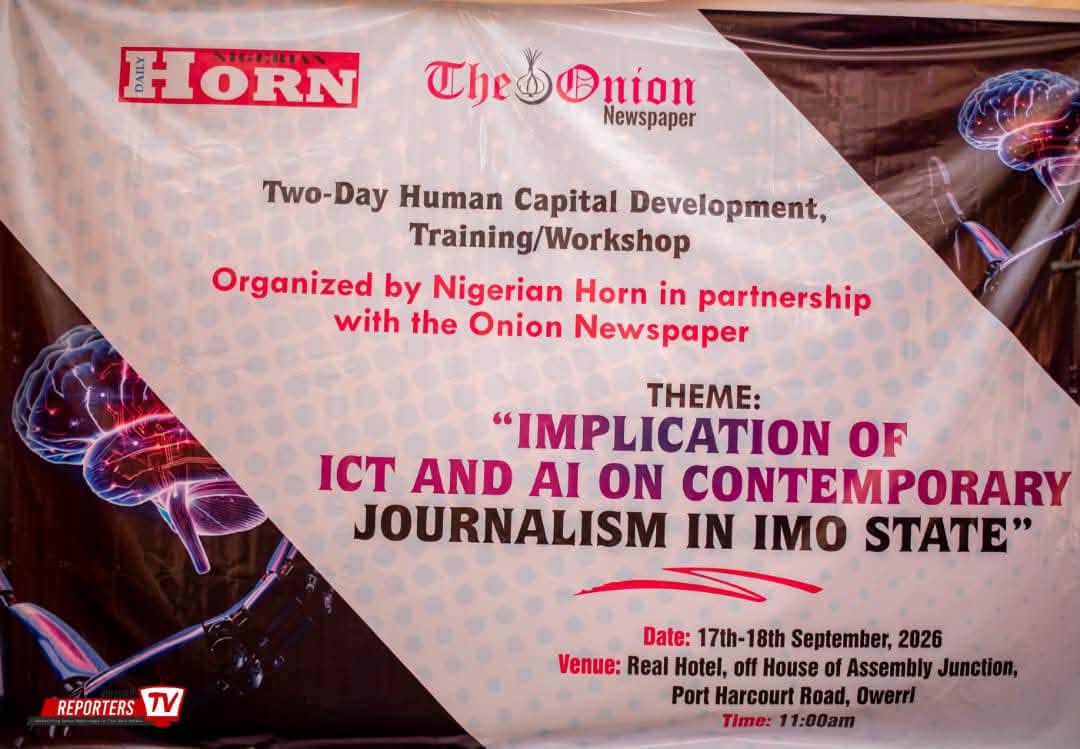
Media practitioner and founder of OtownGist Media and Creative Hub, Chinedu Hardy Nwadike, alongside Professor Lambert Amakeme, facilitated a training workshop for journalists in Imo State on the implications of Information and Communication Technology (ICT) and Artificial Intelligence (AI) for contemporary journalism. The workshop, held on Thursday, September 17, 2026, at Real Hotel, off House of Assembly Junction, Port Harcourt Road, Owerri, was organised by Newspoint Promotions Limited, publishers of Daily Nigeria Horn Newspapers, in collaboration with The Onion Communication Limited, publishers of The Onion Newspapers, under the theme “Implications of ICT and AI on Contemporary Journalism in Imo State.”
Nwadike delivered a presentation titled “From Newsroom to Digital Newsroom: AI, Digital Workflow and the Future of Journalism,” focusing on the opportunities, challenges and practical applications of emerging technologies in news gathering, editing, production and distribution. He maintained that journalists who acquire AI skills have an advantage because they already understand reporting, verification, professional ethics, context and public interest. His presentation emphasised that while AI can improve efficiency, it cannot replace the professional judgment, field experience and editorial responsibility required in journalism.
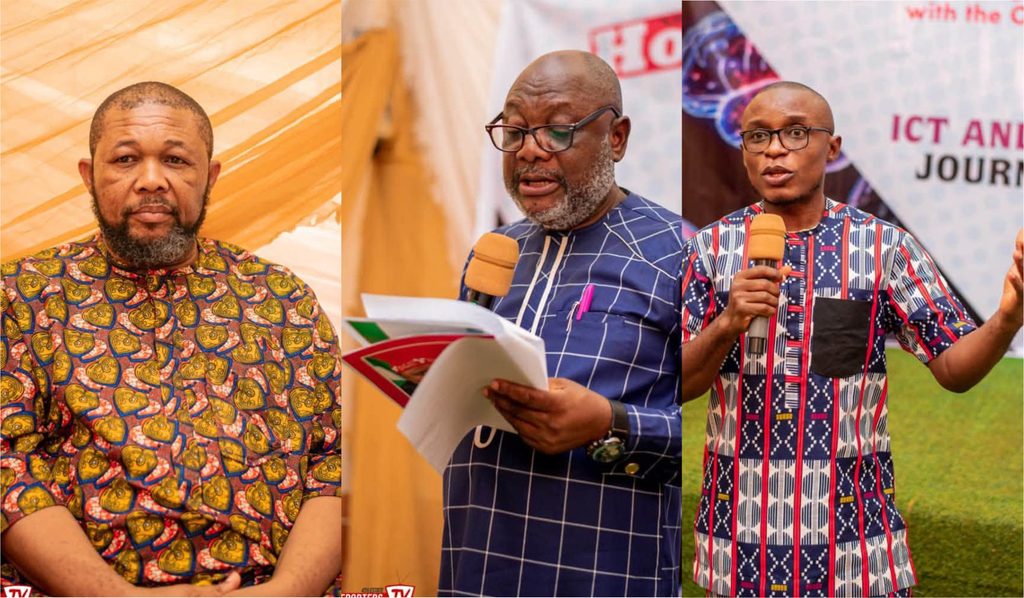
During the presentation, Nwadike examined how journalists could use tools such as ChatGPT, Google Gemini and TurboScribe for interview transcription, organisation of reporting notes, grammar review, document summarisation, headline development and content preparation. He outlined a digital newsroom workflow using Google Drive, where reporters submit stories and multimedia materials for editorial review, approval, production, publication and archiving. He also demonstrated how AI could assist editors in identifying errors, reviewing reports and evaluating stories for different platforms, while stressing that final editorial decisions must remain with human editors, especially concerning names, quotations, figures, allegations and other sensitive information.
Drawing examples from OtownGist’s digital operations, Nwadike discussed how traditional media organisations could adapt their reporting processes to produce content for newspapers, websites, radio, television and social media from the same assignment. He encouraged journalists to improve their mobile journalism skills by using smartphones to capture photographs, interviews, audio and video alongside their written reports. His presentation also covered news videos, vox pops, studio and street podcasts, digital audience engagement, and distribution through Facebook, Instagram, TikTok, YouTube and WhatsApp, while maintaining media websites as primary publishing and archival platforms. He further identified opportunities for media organisations to develop additional revenue through podcast production, photography, livestreaming, event coverage, video editing, documentaries and other production services without compromising editorial independence.
Addressing the risks associated with AI, Nwadike examined deepfakes, cloned voices, synthetic videos, manipulated photographs, misleading screenshots and the circulation of genuine content with false dates, locations or captions. He stressed the importance of verifying original sources, dates, locations, quotations and supporting evidence before publication. His recommendations included establishing structured newsroom workflows, introducing clear guidelines for responsible AI use, strengthening mobile journalism skills and expanding digital publishing capacity. “The tools have changed. The job hasn’t,” stated the concluding slide of his presentation, which reinforced the need for journalists to adopt new technologies while preserving professional standards. Professor Lambert Amakeme also served as a resource person at the workshop.
Speaking earlier, the convener and Chairman of Horn Group of Newspapers, High Chief Bright Chimezie Njoku, explained that the training was organised to educate journalists about the growing influence of AI on their profession and the dangers of misinformation generated through emerging technologies. He expressed concern that AI could produce misleading photographs, fabricated reports and other content capable of deceiving the public. Njoku warned that journalists who failed to update their skills risked losing opportunities as technology continued to change media operations. However, he maintained that trained media practitioners would remain relevant, stating, “With or without AI, you cannot do without trained media practitioners.” He added that the workshop was part of a continuing training initiative, with subsequent sessions expected to focus on practical applications, and encouraged journalists to embrace opportunities for professional development.
The event attracted journalists, publishers, media executives and other stakeholders from various print and electronic media organisations across Imo State. Among the attendees were the Chairman of the Nigeria Union of Journalists (NUJ), Imo State Council, Comrade Ifeanyi Nwanguma; publisher of The Big Truth Newspapers, Owerri, Sir Modestus Nwamkpa; former NUJ Chairman, Chief Innocent Igwe; and Comrade Salvator Amadi. Dr. Basil Ekweke served as compere and moderator of the programme, while Professor Lambert Amakeme and Chinedu Hardy Nwadike were the two resource persons.
In a goodwill message, the Senator representing Imo North Senatorial District, Senator Patrick Ndubueze, commended High Chief Bright Chimezie Njoku and the Horn Group for organising the workshop. Speaking on behalf of the people of Okigwe Zone, the senator observed that the theme reflected technological developments affecting different professions and noted that the training could equip journalists with the intellectual and practical capacity needed to keep pace with contemporary journalism. “I congratulate and commend the Horn Group for this initiative and hope that journalists in the state will take advantage of the opportunity to update their knowledge,” he stated.
Participants who spoke at the programme commended the organisers and called for the training to become a regular professional development initiative. One of the participants, Edison Okereke, urged Governor Hope Uzodimma to support the programme, noting that the Imo State Government was a major beneficiary of media reportage in the state. The workshop was originally scheduled for September 17 and 18, 2026, but was reduced to one day in honour of the late father of a journalist identified as Paul, whose burial was scheduled for Friday, September 18, in Enugu State.
The workshop provided an opportunity for media practitioners to examine the changing demands of journalism, particularly the integration of AI, digital reporting systems, multimedia production and verification procedures into newsroom operations. The organisers indicated that further training sessions would follow as part of efforts to improve journalists’ professional capacity and understanding of emerging technologies.