
Africa’s biggest women’s football tournament returns on Sunday as the 2026 Women’s Africa Cup of Nations (WAFCON) kicks off in Morocco, with a record 16 teams competing for continental glory, qualification for the 2027 FIFA Women’s World Cup, and a historic $2 million winners’ prize.
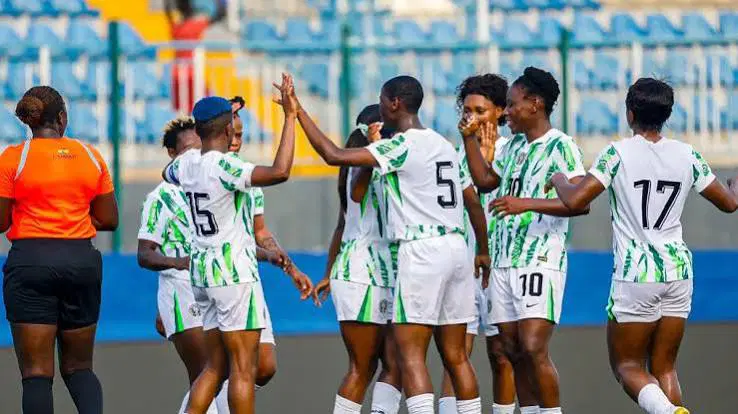
Defending champions Nigeria’s Super Falcons head into the competition as the team to beat after lifting a record 10th WAFCON title in dramatic fashion two years ago. The Falcons recovered from a two-goal deficit to defeat hosts Morocco 3-2 in the final, with Jennifer Echegini scoring the decisive late winner after strikes from Esther Okoronkwo and Folashade Ijamilusi.
All three scorers return for this year’s tournament, giving Nigeria another formidable attacking force as they seek to retain the trophy. The Super Falcons are also targeting one of the four automatic qualification slots available to African nations for the next FIFA Women’s World Cup.
Head coach Justine Madugu said the immediate objective is to secure World Cup qualification by reaching the semi-finals before focusing on defending Nigeria’s continental crown.
“Our first priority is to reach the semi-finals and qualify for the World Cup. Our second goal is to defend the trophy and bring it back to Nigeria. We know it will not be easy because every other nation wants to dethrone us,” Madugu said.
Madugu has assembled a 25-player squad blending experienced internationals with emerging stars based across Europe, Asia and North America. Rasheedat Ajibade will captain the side, while Chiamaka Nnadozie, widely regarded as Africa’s top goalkeeper, is expected to play a key role. Fatima Oloko of Abia Angels is the only home-based player in the squad.
Nigeria will, however, be without experienced defender Ashleigh Plumptre, who misses the tournament through injury.
The Super Falcons have been drawn in Group C alongside Zambia, Egypt, and tournament debutants Malawi. Zambia are expected to provide Nigeria’s biggest challenge, boasting prolific forwards Barbra Banda and Racheal Kundananji, while Malawi will rely on the talented Chawinga sisters—Tabitha and Temwa—to cause an upset.
Hosts Morocco, who finished runners-up in the last two editions, headline Group A with Algeria, Senegal and Kenya. South Africa, champions in 2022, lead Group B, while Ghana, Cameroon, and newcomers Cape Verde are among the contenders in Group D.
This year’s competition marks the largest WAFCON in history, expanding from 12 to 16 participating nations. Morocco is hosting the tournament for the third consecutive edition, with 34 matches scheduled across five stadiums in Rabat and Casablanca. Beyond the title race, teams will battle for four direct World Cup qualification places, while two losing quarter-finalists will advance to intercontinental play-offs for additional qualification opportunities.