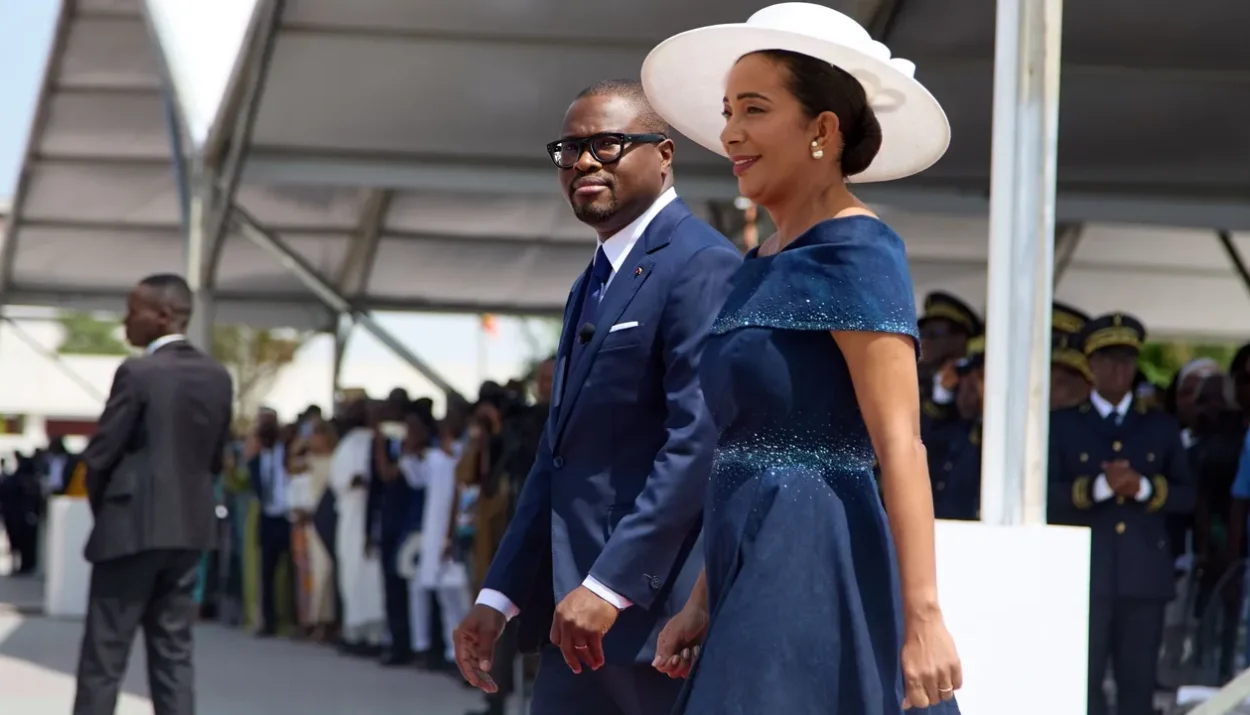

Benin has officially entered a new political era as former Finance Minister Romuald Wadagni was sworn in as president on Sunday, succeeding his longtime ally and former boss, Patrice Talon.
Wadagni, a respected economist and technocrat, took the oath of office in Cotonou after winning the April 12 presidential election with an overwhelming 94 percent of the vote.
The 49-year-old leader is widely seen as a continuation of Talon’s economic and governance policies, having served as finance minister throughout the outgoing administration’s decade in power.
His only challenger, Paul Hounkpe, failed to mount a serious contest during the election. Hounkpe’s political party later aligned with Wadagni’s ruling bloc in parliament, further consolidating the new president’s political grip.
Benin’s main opposition party, the Democrats, did not participate in the election after reportedly failing to secure enough endorsements amid internal divisions, a development that drew criticism from some political observers.
Speaking during his inauguration ceremony, Wadagni promised to lead with accountability and humility.
“I will serve Benin with integrity, courage and commitment,” he said. “I will serve with the constant knowledge that power is never a personal privilege.”
Wadagni assumes office at a critical moment for Benin. While the country has recorded strong economic growth over the past decade, many citizens continue to struggle with rising inequality and limited access to opportunities.
Security also remains a major challenge, particularly in northern Benin where attacks linked to jihadist groups operating across the Sahel have intensified in recent years.
The new president pledged to confront the growing insecurity head-on, warning that his administration would not tolerate threats to national unity.
“Benin will not give in to fear nor complacency. The government will be firm against all those who threaten our unity and security,” Wadagni declared.
During his tenure as finance minister, Benin improved its fiscal standing significantly, reducing the budget deficit to about three percent of GDP while attracting praise from international financial institutions.
Wadagni now begins a seven-year presidential term following a constitutional reform that extended the tenure from five years. Under Benin’s constitution, presidents are limited to a maximum of two terms.
Regional diplomacy is also expected to test the new administration. Benin’s relations with neighbouring Niger and Burkina Faso have faced tensions in recent years following military takeovers in both countries.
However, there were early signs of possible reconciliation on Sunday as Niger’s Prime Minister, Ali Mahaman Lamine Zeine, attended the inauguration ceremony in Cotonou and received applause from attendees.