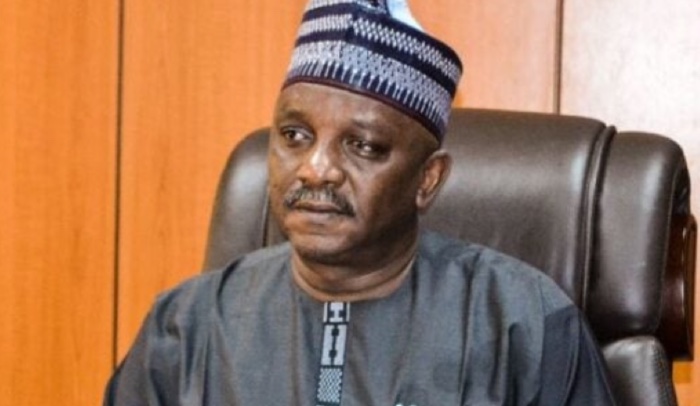

Economic and Financial Crimes Commission has arrested former Minister of Power Saleh Mamman just days after he was sentenced to 75 years imprisonment over corruption linked to major electricity projects.
The EFCC announced on Tuesday that Mamman was apprehended in Kaduna State following what it described as weeks of surveillance and intelligence operations after the former minister reportedly went into hiding.
According to the anti-graft agency, Mamman had failed to appear in court earlier this month when judgment was delivered against him in Abuja, leading to his sentencing in absentia.
The former minister was convicted on 12 counts related to the diversion of funds allocated to two hydroelectric power projects during his time in office under former President Muhammadu Buhari.
During the trial, the court ruled that prosecutors successfully proved beyond reasonable doubt that billions of naira meant for critical electricity infrastructure were diverted through proxy companies and associates.
The presiding judge reportedly found that at least ₦22 billion intended for power projects was siphoned, describing the act as a serious betrayal of public trust.
Mamman received multiple prison terms across the charges, which are to run consecutively, resulting in a total sentence of 75 years.
Reacting to the arrest, EFCC Chairman Ola Olukoyede said securing Mamman to serve his sentence was important to Nigeria’s anti-corruption efforts.
“For us, getting the convict to serve his jail terms is extremely important in view of the seriousness with which we are tackling corrupt practices,” Olukoyede stated.
The former minister is also facing another corruption case in Abuja involving alleged fraud amounting to ₦31 billion. A separate court had earlier issued a warrant for his arrest after he failed to appear for proceedings in that matter.
Mamman served as Minister of Power between 2019 and 2021 and was part of the Buhari administration that repeatedly pledged to improve electricity supply across Nigeria.
His conviction and arrest have reignited public anger over Nigeria’s long-standing electricity crisis, with many Nigerians questioning how funds meant for critical power infrastructure were allegedly diverted while millions continue to face persistent blackouts.
Despite being one of Africa’s major energy producers, Nigeria still struggles with unstable electricity supply, forcing many households and businesses to rely heavily on expensive fuel-powered generators.