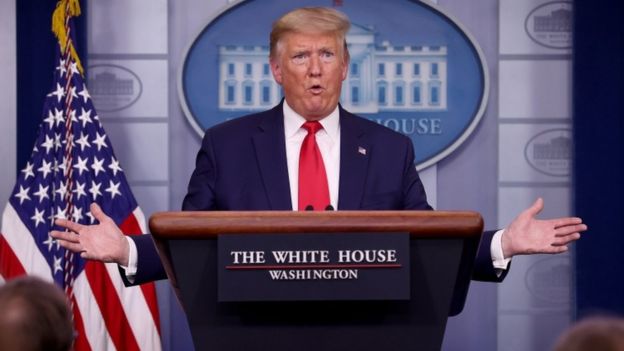
President Donald Trump has escalated tensions in the Middle East by signaling potential military action against Iran, while offering few details on the long-term objectives of a conflict. The US has deployed warships, fighter jets, and tens of thousands of troops to the region, prompting questions about the scale, scope, and consequences of any strike.
Trump has yet to clarify whether he would pursue targeted strikes against Iran’s Islamic Revolutionary Guard Corps, aim to neutralize its missile program as urged by Israel, or seek regime change in Tehran. Iran, in turn, has warned of severe reprisals if attacked.
Military Options on the Table
According to reports from Axios, Trump has been presented with a range of options, including the possibility of targeting Iran’s Supreme Leader, Ali Khamenei. While Trump has repeatedly expressed a preference for a diplomatic solution addressing Iran’s nuclear program, ballistic missile capabilities, and support for militant groups such as Hezbollah and Hamas, Tehran has refused to make concessions.
Indirect talks between the US and Iran in Oman and Switzerland have so far failed to narrow differences. Trump’s envoy, Steve Witkoff, expressed surprise that Iran has not “capitulated” despite the US military buildup.
Alex Vatanka of the Middle East Institute in Washington described the likely US approach as a “limited conflict that reshapes the balance of power without trapping it in a quagmire.” He noted that Iran anticipates “a short, high-impact military campaign that would cripple its missile infrastructure, undermine its deterrent, and reset the regional balance of power following the 12-day war with Israel in June 2025.”
Justifications and Regional Implications
Trump cites previous US attacks that targeted uranium enrichment facilities as proof of America’s ability to dismantle Iran’s nuclear program. He has suggested that regime change in Tehran could promote stability in the region, pointing to ceasefire agreements in Gaza as an example of his peace-making efforts.
Opposition Democrats have criticized Trump, warning that military intervention risks plunging the US into a prolonged and violent conflict. They insist he consult Congress, which holds the constitutional authority to declare war.
Arab monarchies in the Gulf, closely connected to Iran, have also cautioned against US strikes, fearing reprisals and broader destabilization. Analysts note that Iran’s complex political system makes any decapitation strike potentially chaotic, unlike the more centralized leadership in countries like Venezuela.
US Military Presence
The United States has positioned 13 warships in the Middle East, including the aircraft carriers USS Abraham Lincoln and USS Gerald Ford, supported by nine destroyers and three frigates. Dozens of fighter jets are stationed across the region, alongside tens of thousands of US troops. These forces are potential targets in the event of Iranian retaliation.
Richard Haas, former president of the Council on Foreign Relations, highlighted the uncertainty of the outcome: “It could just as easily strengthen [the Iranian regime] as weaken it. It is impossible to know what would succeed this regime if it were to fall.”
Secretary of State Marco Rubio echoed the unpredictability, emphasizing that any leadership vacuum could create unpredictable consequences within Iran.
Mona Yacoubian of the Center for Strategic and International Studies warned that Iran’s diffuse centers of power make “decapitation strikes” highly risky and could trigger widespread chaos.
The next steps for the Trump administration, including a potential decision in the coming two weeks, could shape the strategic and security landscape of the Middle East for years to come.