
Tinubu Seeks Re-enactment of 2026 Budget, Proposes Reduction to ₦65.18tn
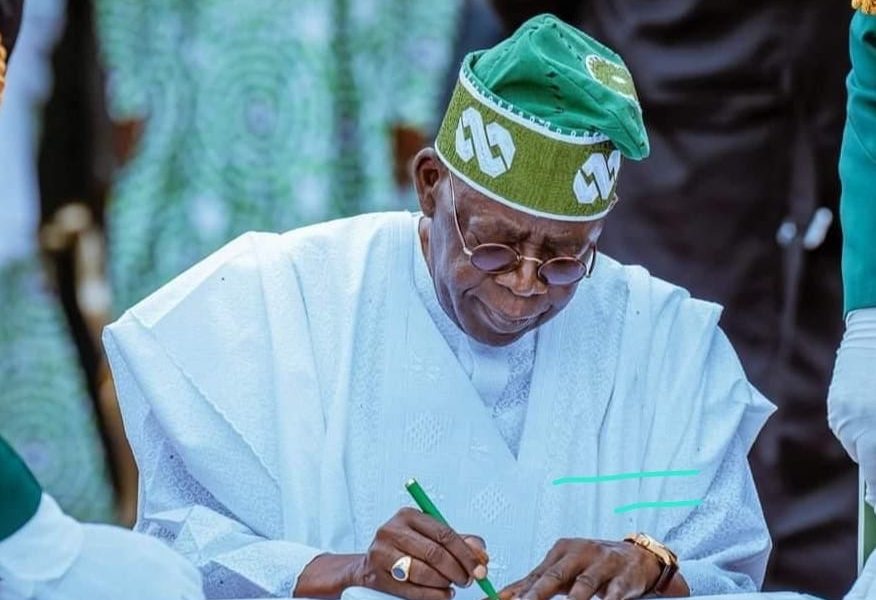
President Bola Tinubu has asked the House of Representatives to repeal and re-enact the 2026 Appropriation Act, proposing a reduction in the overall budget from ₦68.32tn to ₦65.18tn.
The revised proposal retains the Federal Government’s fiscal deficit at ₦31.46tn, despite the reduction in planned expenditure.
Tinubu’s request was contained in a letter dated November 20, 2026, addressed to the Speaker of the House of Representatives, Tajudeen Abbas, and read during plenary on Tuesday.
The President also transmitted a revised 2026 Federal Government Fiscal Framework, explaining that the adjustments were intended to align the budget with existing obligations and available resources.
Under the revised proposal, aggregate expenditure stands at ₦65.176tn, compared with ₦68.323tn in the approved budget. Projected Federal Government revenue, including earnings from Government-Owned Enterprises, is ₦33.720tn, while capital expenditure is put at ₦26.232tn.
According to Tinubu, the proposed changes are intended to regularise certain expenditures incurred by the Nigerian National Petroleum Company Limited (NNPCL) on behalf of the Federation, address underprovided debt-service obligations and recognise issued capital warrants and supplementation commitments.
The revision also provides for refunds to Ministries, Departments and Agencies (MDAs) and special accounts.
Tinubu said most capital provisions for MDAs consisted of amounts already warranted, while a few new capital and overhead allocations were introduced to address priority national interventions.
He identified the completion of critical road projects, protection of agricultural production, reduction of production costs, improvement of farm yields, better market access and measures to address water vulnerability as key priorities.
The President said the revised fiscal framework was designed to prioritise existing commitments, improve the credibility and execution of the capital budget and maintain fiscal restraint.
Despite the reduction in overall expenditure, the fiscal deficit, including project-tied loans, remains unchanged at ₦31.457tn, representing 5.64 per cent of Gross Domestic Product.
Tinubu also retained proposed new borrowing of ₦29.22tn, comprising ₦18.43tn in domestic borrowing and ₦10.79tn in foreign borrowing.
On external borrowing, the President said the planned $7.7bn loan, estimated at ₦10.37tn using an exchange rate of ₦1,346.50 to the dollar, would finance the existing foreign borrowing provision without increasing the borrowing envelope.
In the letter, Tinubu urged lawmakers to give the bill expedited consideration, saying the revised appropriation was necessary for orderly budget implementation and settlement of outstanding obligations.
He said: “I, therefore, request the kind cooperation of the House of Representatives for expeditious consideration and passage of the Bill to facilitate orderly implementation of the revised budget and settlement of existing obligations.”
The bill will now undergo legislative scrutiny before the revised appropriation can take effect.
If passed, it will provide the legal basis for the Federal Government to implement the adjusted spending plan and meet the obligations outlined in the revised fiscal framework.