
Tinubu: Over 1,000 Terrorism Suspects Convicted, 2,000 More Facing Prosecution
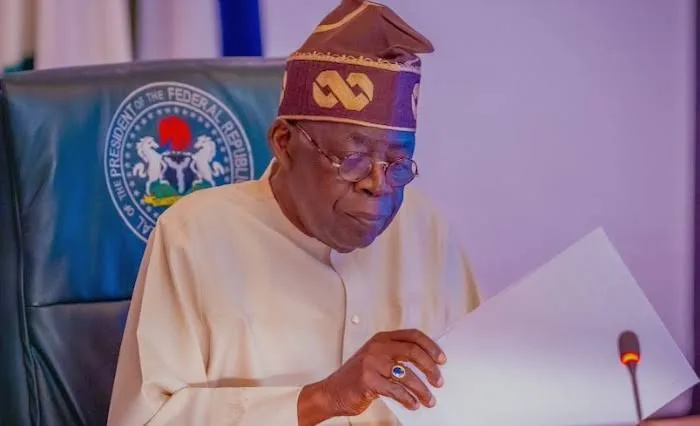
President Bola Tinubu has said more than 1,000 terrorism suspects have been convicted in Nigeria, while over 2,000 others are currently undergoing prosecution.
Tinubu, who was represented by the National Security Adviser, Nuhu Ribadu, disclosed this on Monday at the opening of the 2026 Chief of Defence Intelligence Annual Conference in Abuja.
He described the figures as evidence of Nigeria’s efforts to prosecute terrorism-related cases, claiming that the country now has one of the highest rates of prosecution of terrorist elements globally.
The President also said Nigerian security forces had killed or arrested four of eight identified senior terrorist leaders, describing the operations as evidence of growing capacity to dismantle terrorist networks.
Among the operations he highlighted was the elimination of senior Islamic State leader Abu Bilal al-Minuki in May 2026. He also cited the arrest of Omar Hassan Ma’adou and the arrests of Abu Barra of Ansaru and Mamuda of Mahmudawa in 2025.
Tinubu further identified operations against Ahmed Ohida’s ISWAP southern expansion network as part of the security gains recorded by the administration.
However, he said four identified figures remained targets of security operations: Ba Shuwa of ISWAP, Abdullahi Oro of IS-Sahel, Sadiku of JAS in the North-Central region and Bakura Doro in the Lake Chad Basin.
The President also said security forces had killed senior bandit leaders, including Halilu Sububu, alongside several fighters. He added that the government was working to sustain pressure on criminal networks and protect vulnerable communities.
On security in the Niger Delta, Tinubu disclosed that recorded incidents of illegal oil bunkering and vandalism of critical oil and gas infrastructure declined from 32 in the first quarter of 2026 to 21 in the second quarter and 17 in the third quarter.
He described the figures as a 46.88 per cent reduction between the first and third quarters. He also said crude oil and condensate production averaged approximately 1.68 million barrels per day in August 2026.
Tinubu said the government would continue strengthening intelligence sharing and cooperation among the Department of State Services, Armed Forces, Police and other security agencies ahead of the 2027 general elections.
He also emphasised the growing importance of artificial intelligence, machine learning, cyber capabilities and unmanned surveillance systems in modern intelligence operations.
According to him, Nigeria must integrate AI-assisted analysis, geospatial intelligence and surveillance technology into secure systems capable of turning information into timely security action.
However, he cautioned that artificial intelligence outputs must be verified through human judgement, while data protection and cybersecurity safeguards must remain central to the adoption of new technologies.
The President said he had directed the Special Adviser on Homeland Security, retired Major General A. A. Famadewa, to coordinate the preparation of a Comprehensive National Threat Assessment and a Five-Year Rolling Strategic Defence Operations Plan.
He also called for stronger intelligence partnerships involving Nigeria’s security agencies, state-level institutions, regional partners and international allies.
In his remarks, Defence Minister Christopher Musa commended intelligence personnel for their contributions to national security and urged them to remain proactive. He also reaffirmed the government’s commitment to developing indigenous defence manufacturing.
The Chief of Defence Staff, General Olufemi Oluyede, described intelligence as essential to military planning and operational effectiveness. He called for greater investment in artificial intelligence, advanced data analytics, geospatial intelligence and unmanned systems.
Oluyede said the armed forces would continue to prioritise intelligence integration, capacity development and technological innovation to shift security operations towards proactive, intelligence-led responses.