
Orji Kalu Admits Selling Heavy Weapons to Buyers Across Africa, Says Profit Was His Priority
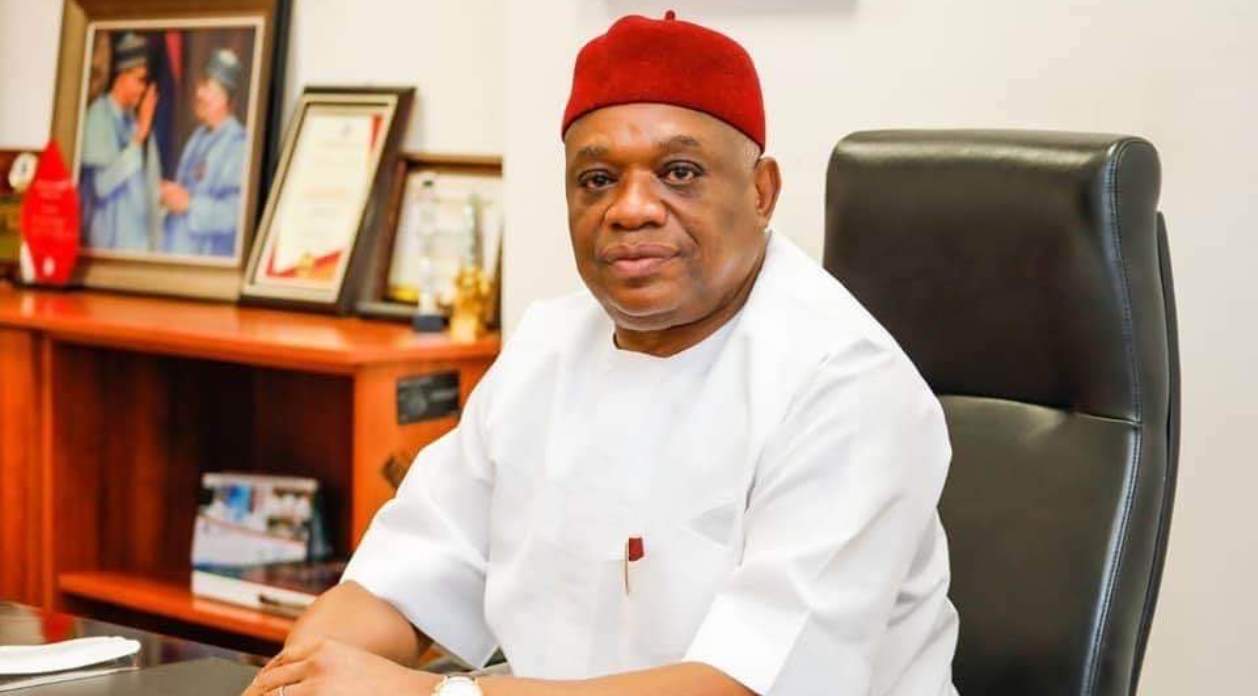
Former Abia State Governor and Senator representing Abia North, Orji Uzor Kalu, has admitted that he previously traded in heavy weapons, saying he sold arms to buyers who could afford them without considering how the weapons might be used.
Kalu made the disclosure during an interview on Arise Television on Monday, November 9, while discussing his business activities and relationships with former African leaders.
Asked whether he had been involved in arms dealing, the senator answered in the affirmative, explaining that he eventually abandoned the business after his parents intervened.
When asked whether he considered the possibility that the weapons he sold could be used to kill people, Kalu said his primary motivation at the time was making money.
“No, no, no, no, no, no. I was selling guns to make money, whether they blow up [people], it’s not my business,” he said.
He added that his parents eventually asked him to stop the business, and he complied.
“My mother and my father came and said I must stop, and I stopped,” he stated.
During the interview, the former governor was also asked whether he supplied weapons to the African National Congress (ANC) during its struggle against apartheid in South Africa.
Kalu denied that his activities were limited to the organisation, claiming that he sold weapons to any individual or buyer with the financial capacity to purchase them.
“No, I was selling to anybody who wants to buy. If you have the money, you want to buy in D.R.C, I sell to you, you want to buy in Namibia, you want to buy…” he said.
He also acknowledged being asked about possible weapons sales to Libya under its former leader, Muammar Gaddafi, maintaining that he sold to anyone who had the money.
“To anybody that had money to buy,” he responded.
Kalu described Gaddafi as a good man and clarified that his former business involved heavy weapons traded between countries rather than small arms.
“No, these are heavy arms that were sold country to country,” he explained.
The senator, however, declined to disclose where he sourced the weapons, describing the information as his private business.
His comments have drawn attention to the history of international arms restrictions involving some of the countries mentioned during the interview.
South Africa was placed under a mandatory United Nations arms embargo in November 1977 through Security Council Resolution 418, as international pressure mounted against the apartheid government. The restrictions remained in place until 1994, following the country’s transition to democratic rule.
The Democratic Republic of Congo has also been subject to UN arms restrictions since 2003. Although restrictions on arms supplies to the Congolese government were subsequently lifted, measures targeting non-governmental armed groups and individuals remained in place.
Libya was placed under a UN arms embargo in February 2011 through Security Council Resolution 1970, following the violent crackdown on protests against Gaddafi’s government.
These restrictions were designed to limit the flow of weapons into conflict situations and prevent their use in violence and human rights abuses.
However, Kalu did not establish during the interview that he supplied weapons to any of the countries mentioned while the respective UN embargoes were in force.
His admission has nevertheless raised questions about the scale of his former arms business, the sources of the weapons, the identity of his buyers and the periods during which the transactions allegedly took place.