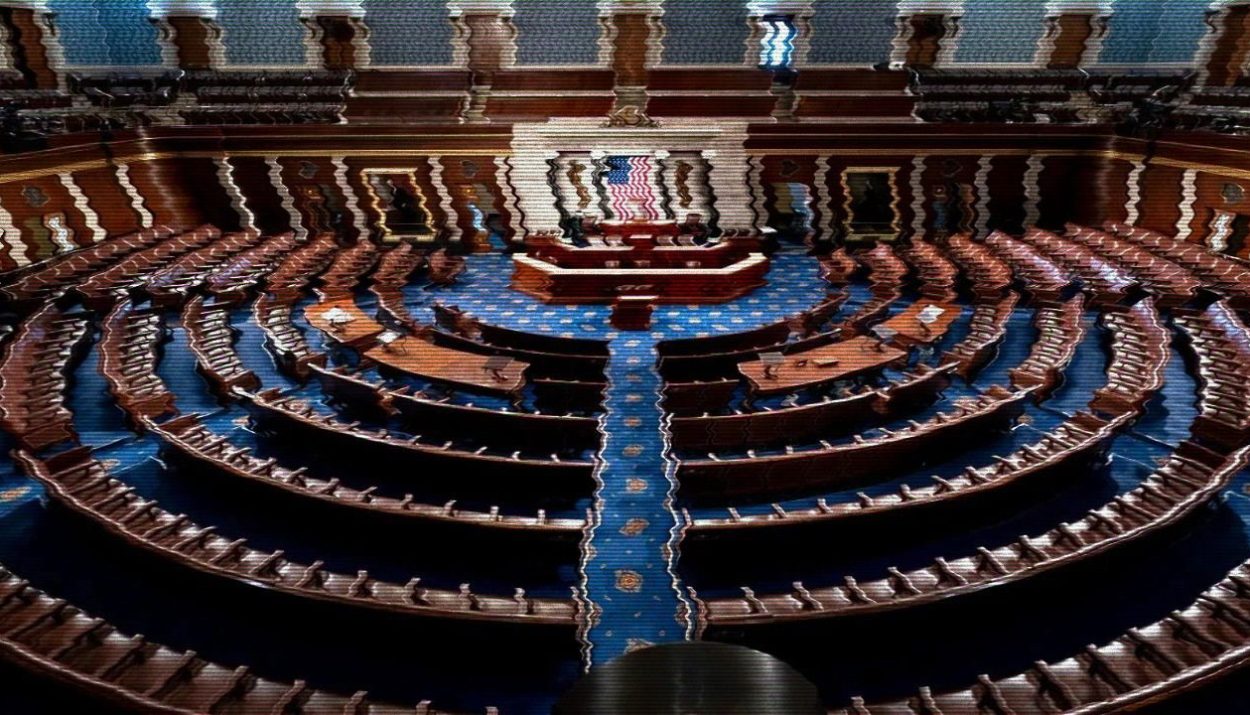
The United States House of Representatives has approved a spending bill that seeks to suspend all U.S. foreign assistance to Nigeria until the country demonstrates measurable progress in protecting Christians and other vulnerable communities from violence.
The National Security, Department of State and Related Programs Appropriations Act for the 2027 fiscal year was passed on Wednesday by a 217-209 vote. While the legislation has cleared the House, it is not yet law. It must still receive approval from the U.S. Senate before being signed by President Donald Trump.
A key provision in the bill directs the U.S. government to withhold all foreign assistance to Nigeria until it can certify that the Nigerian government is taking effective steps to protect Christian communities from attacks. The legislation also calls for stronger accountability measures against governments accused of persecuting people based on their faith and expands support for international religious freedom initiatives.
The proposal was championed by Republican lawmakers, including Riley Moore and Jeff Steube of Florida. Following the House vote, Steube defended the measure, saying, “American taxpayers should NEVER bankroll governments that turn a blind eye while Christians are abducted, tortured, and murdered.”
Moore, who has repeatedly accused the Nigerian government of failing to adequately protect Christians, argued that the measure is intended to pressure authorities into taking stronger action against violent attacks, particularly in parts of Nigeria’s Middle Belt. The original proposal sought to suspend 50 percent of U.S. assistance, but Steube successfully amended the bill to increase the restriction to 100 percent, a move endorsed by the House.
The proposed restriction comes despite continued security cooperation between both countries. Earlier this year, the United States allocated more than $413 million for counter-insurgency operations involving Nigeria and other African nations. Washington has also supplied military equipment, shared intelligence and supported joint operations against terrorist groups, including an operation that eliminated a senior commander of the Islamic State West Africa Province (ISWAP).
The Nigerian government has consistently rejected allegations of religious persecution, insisting that insecurity across the country affects people of different religious and ethnic backgrounds. Several local and international human rights organisations have also disputed claims of a targeted campaign against Christians, arguing that violence in Nigeria is driven by a complex mix of terrorism, banditry, communal conflict and criminality.
If eventually enacted, the legislation could significantly reshape U.S.-Nigeria relations by making future American assistance conditional on Nigeria’s human rights and security record, particularly regarding the protection of religious communities.