
Tinubu’s Decision to Retain Shettima for 2027 Reignites Debate Over APC’s Muslim-Muslim Ticket
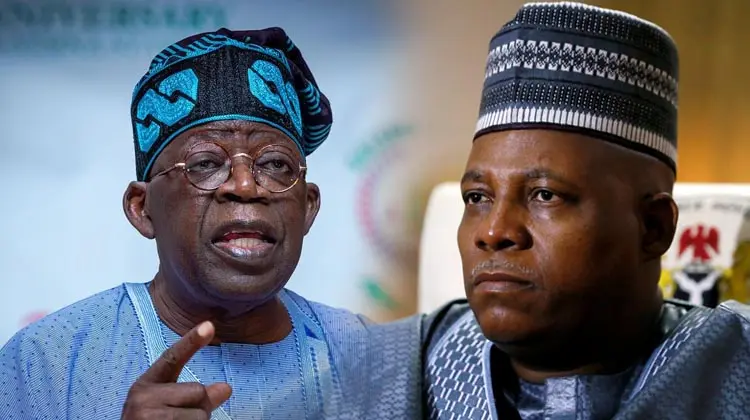
President Bola Tinubu’s decision to keep Vice President Kashim Shettima as his running mate for the 2027 presidential election has revived the national debate over the All Progressives Congress (APC)’s Muslim-Muslim ticket, with political parties, advocacy groups and stakeholders sharply divided over whether competence or religious balance should shape Nigeria’s leadership.
The APC’s confirmation ends months of speculation that Tinubu could replace Shettima with a Northern Christian ahead of the next general election. Instead, the ruling party has chosen to retain the same ticket that secured victory in the 2023 presidential election despite widespread criticism at the time.
The same-faith ticket was one of the most controversial issues before the 2023 polls. Critics argued that presenting two Muslim candidates for Nigeria’s highest offices ignored the country’s religious diversity and long-standing tradition of balancing presidential tickets. However, Tinubu and Shettima defeated candidates including Atiku Abubakar of the Peoples Democratic Party (PDP), Peter Obi of the Labour Party and Rabiu Kwankwaso of the New Nigeria Peoples Party (NNPP).
Following the APC’s latest decision, some opposition parties insisted that leadership quality should take precedence over religion. The All Progressives Grand Alliance (APGA) said competence should remain the key factor in choosing leaders. Its National Publicity Secretary, Ejimofor Opara, said Nigeria must move beyond identity politics, adding, “Competence should remain the defining issue in 2027, not whether candidates are Muslims or Christians.”
The Young Progressives Party (YPP) echoed similar views. Its spokesman, Wale Egbeola-Martins, argued that Nigeria’s biggest challenge has always been poor leadership rather than the religious identity of elected officials. He maintained that character, integrity and accountability should outweigh religious or ethnic considerations.
Defending the decision, the APC said retaining Shettima was based on national interest and political realities rather than religion. The party’s Director of Publicity, Bala Ibrahim, said fears that the Muslim-Muslim ticket would trigger religious tension had not materialised since the administration assumed office. He added that the government had continued to promote peaceful coexistence among Nigerians of different faiths.
Political analysts and party leaders also suggested that issues such as insecurity, the economy and governance are likely to dominate the 2027 election more than religious identity. Action Democratic Party National Chairman, Yabagi Yusuf, described the decision as a political calculation aimed at building the strongest electoral ticket, while Coalition of United Political Parties leader Mark Adebayo predicted that voters would focus more on government performance than faith.
However, not everyone agrees. The Coalition of South East Youth Leaders, the South-South Youths Initiative, the Middle Belt Forum and a faction of Afenifere criticised the APC’s decision, arguing that another Muslim-Muslim ticket could deepen feelings of exclusion among Christians and undermine the principle of inclusiveness in a multi-religious country. Others, including the Ijaw Youths Council, Centre for Accountability and Open Leadership, APC stakeholders in Abia State and industrialist Sam Ohuabunwa, backed Tinubu’s decision, insisting that loyalty, competence and governance should remain the primary considerations as Nigeria heads toward the 2027 presidential election.