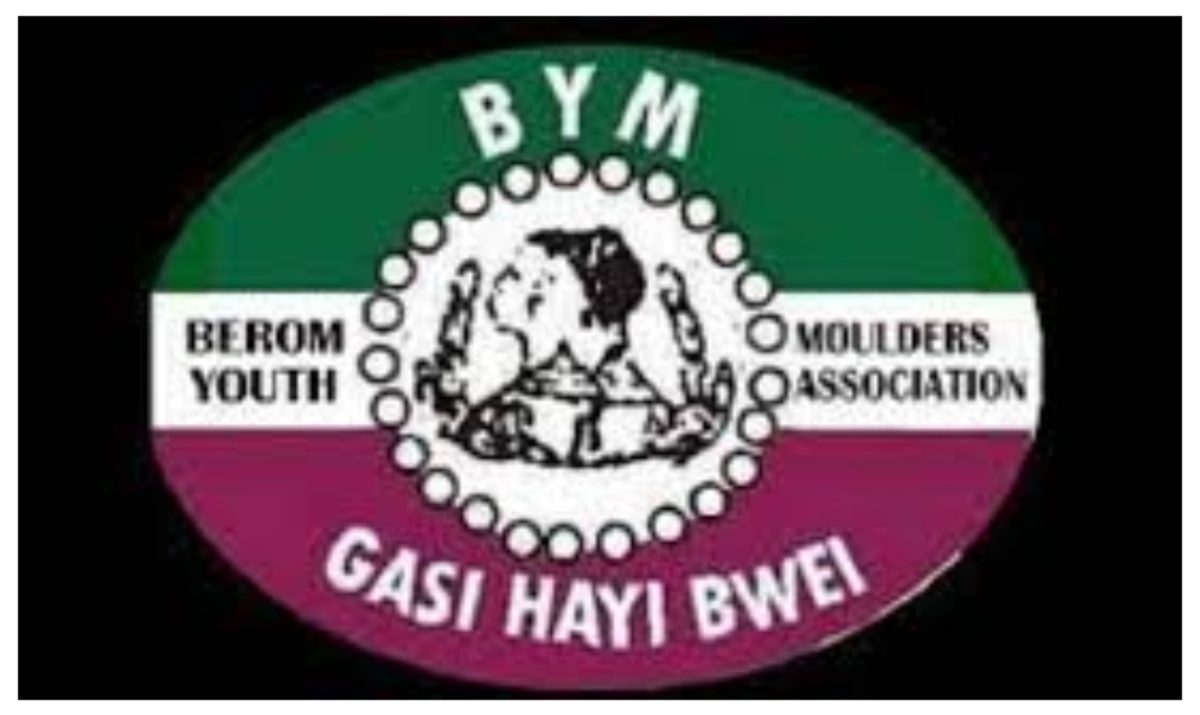

Fresh controversy has erupted over the recent violence in Plateau State, with the Berom Youth Moulders-Association (BYM) rejecting allegations by the Miyetti Allah Cattle Breeders Association of Nigeria (MACBAN) that Berom militias killed four Fulani herders.
In a statement issued on Friday, BYM described MACBAN’s claims as false and misleading, insisting that the four men killed were not peaceful herders but members of an armed group that allegedly attacked local miners in Gyel District, Jos South Local Government Area.
The disagreement follows a statement by Plateau MACBAN Chairman, Ibrahim Yusuf Babayo, who alleged that four Fulani herdsmen were ambushed and killed while grazing cattle around the Gero–Rafin Bauna axis. According to MACBAN, another herder survived the attack with serious injuries.
Responding through its National Publicity Secretary, Rwang Tengwong, BYM dismissed the allegation that Berom communities operate militia groups. The association argued that if such militias existed, Berom communities would not have continued to suffer repeated attacks, killings and displacement allegedly carried out by armed assailants.
BYM claimed intelligence available to the group showed that more than 40 armed men stormed a mining site at Nyango in Gyel District on June 29, 2026, opening fire on artisan miners. According to the association, three people were killed during the attack, while two others sustained injuries.
The group further alleged that local vigilante members mobilised after receiving distress calls from the area and confronted the attackers. During the exchange, four of the alleged assailants were killed, while others reportedly escaped.
Rejecting MACBAN’s version of events, BYM accused the cattle breeders’ association of attempting to present the deceased as innocent herders instead of armed attackers. It maintained that the area where the incident occurred had no nearby Fulani settlement or active grazing activities at the time of the attack.
The association also accused MACBAN of repeatedly misrepresenting violent incidents involving Fulani groups, warning that such narratives distract attention from the victims of attacks and the broader security challenges confronting Plateau communities.
The conflicting accounts from both organisations highlight the continuing tensions surrounding security and communal violence in Plateau State, with authorities yet to issue an official position reconciling the differing claims.