
93% of Nigerian Inmates Are State Offenders, Many Shouldn’t Be in Prison – Tunji-Ojo
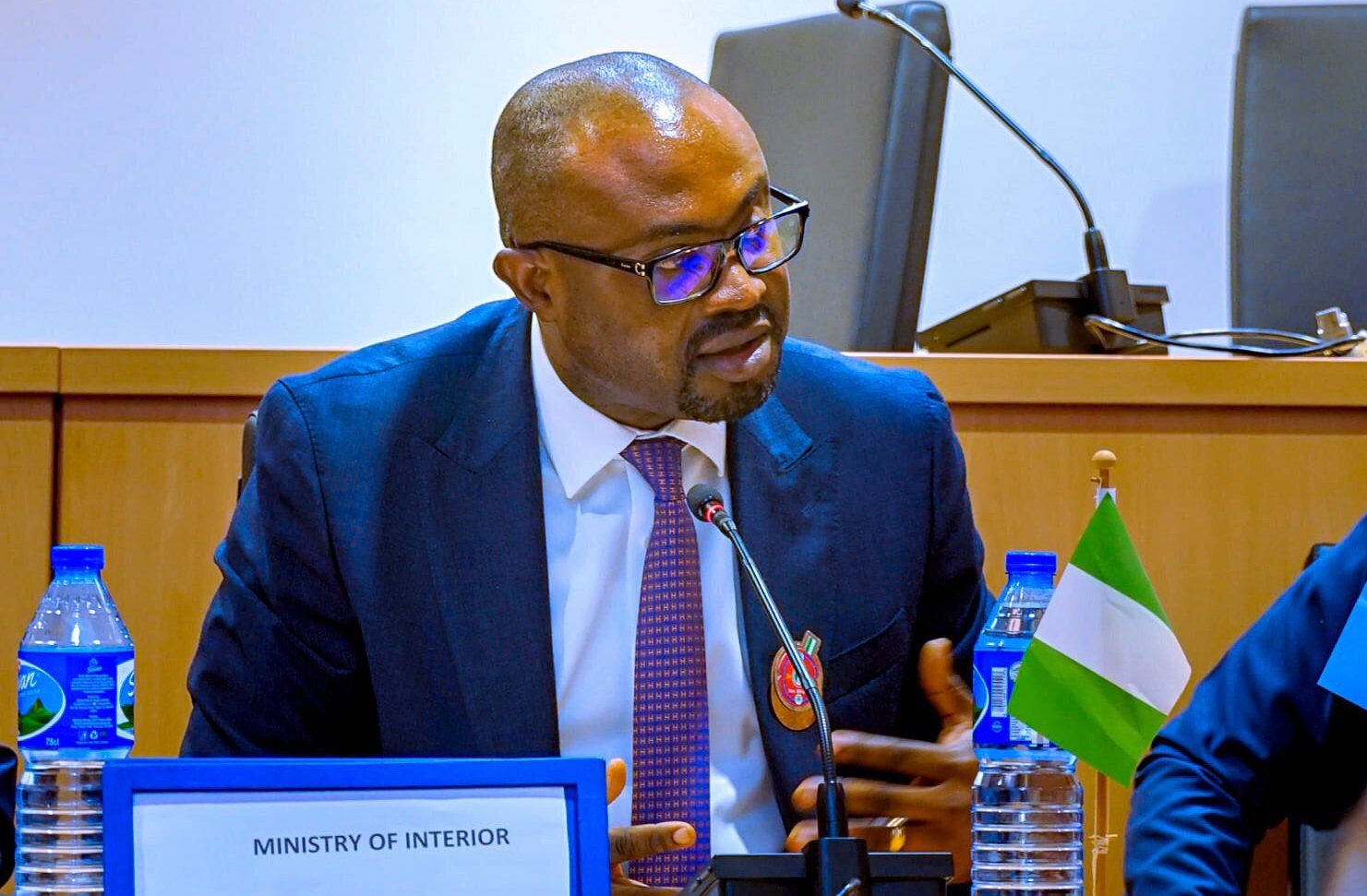
Nigeria’s Minister of Interior, Dr. Olubunmi Tunji-Ojo, has revealed that 93 per cent of inmates in the country’s correctional facilities are state offenders, while only seven per cent are being held for federal offences, arguing that many of those behind bars should never have been incarcerated.
Speaking on Wednesday at the Regional Conference on the Classification of Prisoners and the Use of Technology in Prisons in Africa in Abuja, the minister said the Federal Government has intensified efforts to decongest correctional centres by reviewing cases involving minor offences and low-value fines.
According to Tunji-Ojo, an audit conducted shortly after he assumed office uncovered more than 4,000 inmates who were serving jail terms over fines and compensation of less than ₦500,000. He described the situation as economically unsustainable, noting that the government was spending far more to keep such offenders in custody than the value of the penalties imposed on them.
“I said, what is the sense in this? Because I feed them in a year with more than 10 times of the fine. So how is the government benefiting? We were able to clear that, and in one day, we decongested our correctional centre by five per cent,” he said.
The minister questioned whether many of Africa’s overcrowded prisons were genuinely overcrowded or filled with people convicted of offences that could have attracted non-custodial punishments. He urged correctional authorities across the continent to review incarceration policies and prioritise alternatives for minor offenders.
Tunji-Ojo also announced a significant drop in Nigeria’s recidivism rate, saying the number of repeat offenders returning to correctional facilities fell from about 13,000 cases in 2023 to 1,000 last year. He attributed the improvement to expanded education and rehabilitation programmes across custodial centres.
He disclosed that 62 inmates are currently pursuing postgraduate studies, while 261 are enrolled in undergraduate programmes, 1,125 are receiving formal education, and 9,582 inmates are participating in vocational and non-formal training. The minister added that 18 National Open University of Nigeria (NOUN) study centres now operate within correctional facilities nationwide.
Highlighting the role of technology in strengthening security, Tunji-Ojo said Nigeria has recorded no jailbreaks or attacks on correctional facilities in the past three years. He cited a recent case where an escaped inmate was rearrested after biometric data flagged him while attempting to obtain a Nigerian passport through the Nigeria Immigration Service.
Also speaking at the conference, the Controller General of the Nigerian Correctional Service, Sylvester Ndidi Nwakuche, said reforms under the Nigerian Correctional Service Act, 2019, have modernised prison administration. He noted that improved inmate classification and technology are helping authorities better manage security risks, protect vulnerable inmates and deliver more effective rehabilitation programmes across the country.