
South Africa Migrant Crisis Deepens as Anti-Immigrant Deadline Sparks Fear, Mass Exodus and Tensions
A growing wave of anti-immigrant sentiment in South Africa is pushing thousands of undocumented migrants into fear, displacement, and urgent plans to leave the country ahead of a protest-driven deadline set for 30 June.
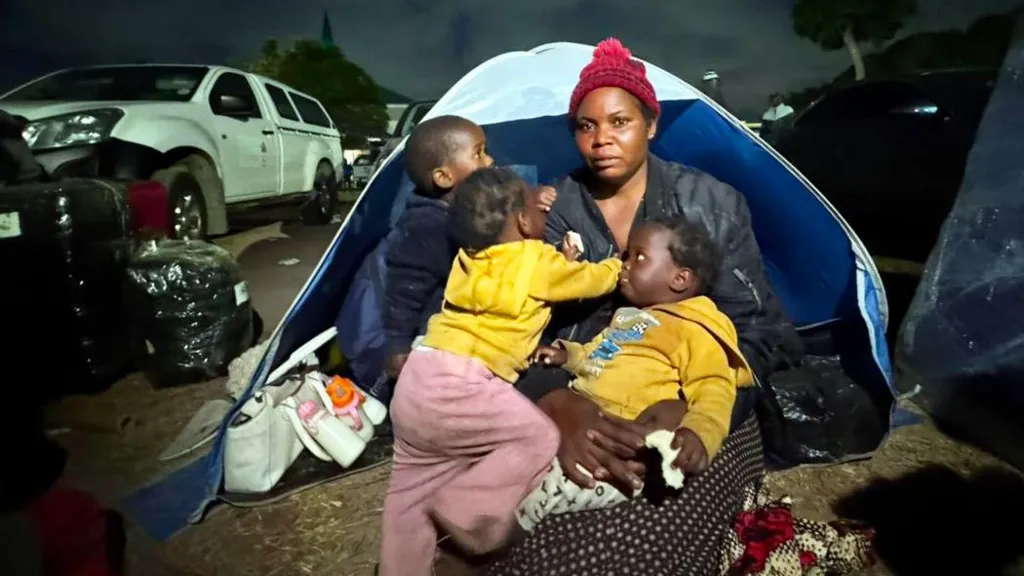
In Durban, KwaZulu-Natal, panic has escalated among foreign nationals—many from Malawi—after reports of intimidation, forced evictions, and violent attacks in informal settlements. One Malawian woman, speaking through tears while holding her one-year-old triplets, described a terrifying ordeal that forced her and her family into an open field now sheltering thousands.
She said armed men stormed her home, demanding that she leave the country immediately. According to her account, her husband was assaulted with machetes and whips and sustained serious injuries requiring hospital treatment.
The makeshift camp in Durban has grown rapidly, with an estimated 7,000 migrants gathering with their belongings as humanitarian groups distribute food and blankets. Many say they are living in constant fear as pressure mounts from local groups demanding their departure.
The protests are being driven by movements such as March and March and backed by political voices like ActionSA, who accuse undocumented migrants of overstaying visas and straining public services. Protesters have set a firm deadline of 30 June for migrants to leave voluntarily, chanting slogans such as “Mabahambe” (“They must go”).
South African President Cyril Ramaphosa has warned against the rising hostility, saying scapegoating vulnerable groups will not solve the country’s deep economic challenges. His administration has also reiterated that harassment of individuals in public spaces over nationality is unacceptable.
Despite this, tensions continue to rise. Protest organisers insist their actions are not xenophobic but rooted in concerns over unemployment, inequality, and pressure on public services. South Africa currently faces one of the world’s highest unemployment rates, recorded at 32.7%, with hundreds of thousands of job losses reported in early 2026.
Foreign governments, including Malawi, Ghana, Mozambique, Nigeria, and Zimbabwe, have begun arranging repatriation efforts as thousands of migrants consider leaving. Nigerian returnees recently arriving in Lagos described South Africa as increasingly unsafe, with reports of hostility toward foreigners, particularly Africans.
However, humanitarian concerns are also mounting. Some migrants with legal status, including refugees, say they are still being targeted, with families reporting harassment in schools, public transport, and daily life. Others say fear has forced them to shut down businesses and withdraw children from education.
The situation has revived memories of past outbreaks of xenophobic violence in South Africa, including deadly unrest in 2008 and later incidents in 2015, 2016, and 2019. Regional governments have warned that rising tensions could spiral into wider instability if not contained.
Authorities say enforcement measures against undocumented migration are increasing, including arrests and deportations, while government-led operations have targeted informal trading zones in urban centres.
At the same time, misinformation and political rhetoric have complicated the crisis, with claims about migrant numbers and responsibility for economic hardship circulating widely on social media and in political campaigns ahead of upcoming local elections.
Analysts warn that the current climate—combining economic frustration, political mobilisation, and online amplification—could deepen divisions further if not carefully managed.
As the 30 June deadline approaches, thousands of migrants remain stranded between fear of violence and uncertainty over where to go next, while South Africa faces mounting pressure to balance law enforcement with human rights and regional stability.