
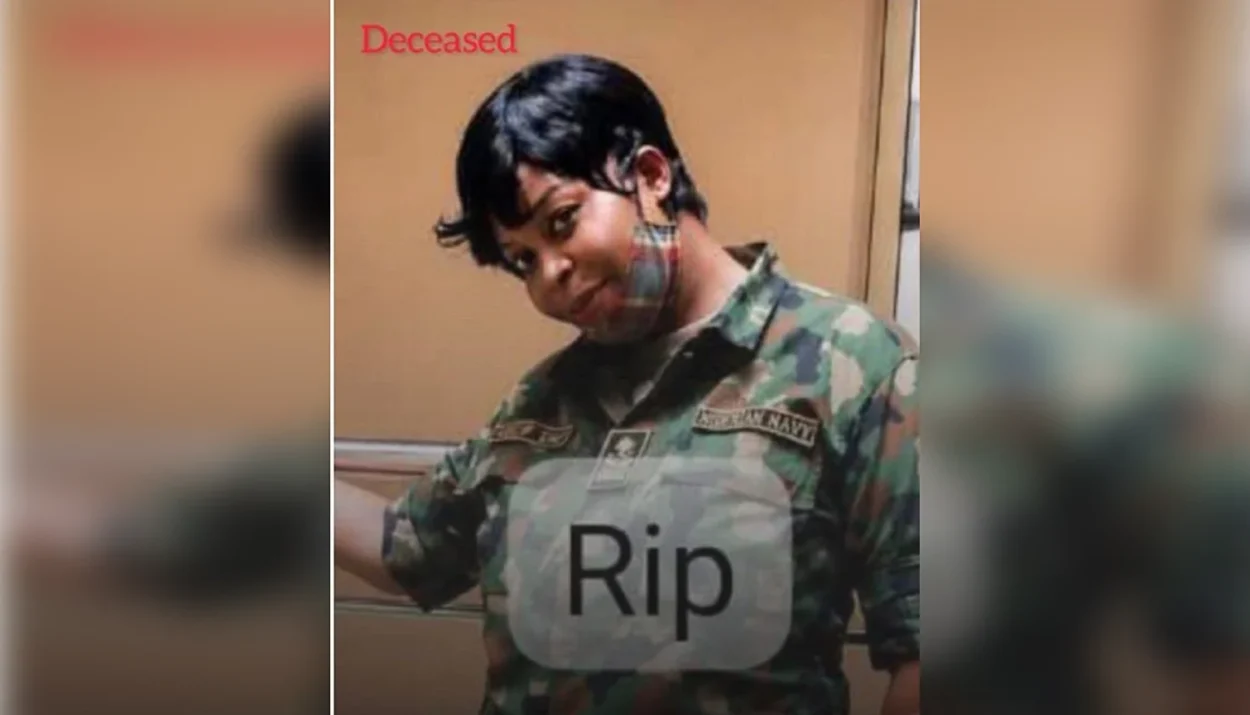
The Nigerian Navy has dismissed viral reports claiming that a female warrant officer died after allegedly being subjected to harsh punishment by a superior officer at a naval facility in Lagos.
The controversy followed widespread social media claims that Warrant Officer M.O. Yusuf collapsed and died after being forced to carry out strenuous outdoor labour despite reportedly complaining of ill health.
Reacting to the allegations on Wednesday, the Navy’s spokesperson, Captain Abiodun Folorunsho, described the reports as false and misleading, insisting that the officer’s death was not linked to any disciplinary action.
According to the Navy, Yusuf died on May 20, 2026, at the Gowon Estate Sick Bay in Ipaja, Lagos, and the circumstances surrounding her death had already been communicated to her family.
“The true cause of the rating’s death is a medical matter that has been properly communicated to her family. We urge the public to refrain from speculation and allow the bereaved family to grieve in peace,” Folorunsho stated.
The viral account circulating online alleged that Yusuf resumed duty while unwell and requested medical attention but was instead ordered to carry out extra labour under the supervision of an officer identified as Lt.-Commander S.T. Abashim.
The reports further claimed that the officer later became dizzy, suffered blurred vision and was placed in a ward without immediate medical treatment before dying about an hour later.
The allegations triggered outrage online, with many Nigerians demanding an independent investigation and raising concerns about welfare and disciplinary practices within the military, especially regarding female personnel.
While denying the claims, the Nigerian Navy maintained that the welfare, health and dignity of its officers and ratings remain a priority, stressing that all disciplinary and medical procedures are guided by established military regulations.
However, reports from within the service suggested that Yusuf had reportedly been ill before returning to duty, with claims that she may have been punished after resuming work the following day.
The incident has reignited conversations about working conditions, accountability and welfare policies within Nigeria’s armed forces as calls for transparency continue to grow.