U.S. President Donald Trump has triggered widespread criticism after launching a series of attacks on Pope Leo, accusing the pontiff of political bias and dismissing his comments on global conflict as “radical left” messaging.
Speaking to reporters after returning from Florida to Washington, Trump said bluntly, “I’m not a fan of Pope Leo,” escalating tensions that began after the Pope reportedly questioned the moral framing of the U.S.-Israel-Iran conflict.
The dispute intensified following remarks attributed to Pope Leo, in which he warned that a “delusion of omnipotence” is driving global warfare. The comments were widely interpreted as a critique of U.S. foreign policy and military escalation in Iran, drawing sharp reactions from Trump and his supporters.
In a lengthy social media post, Trump accused the Pope of political activism, writing, “Pope Leo is WEAK on Crime, and terrible for Foreign Policy,” and adding that he “doesn’t want a Pope who thinks it’s OK for Iran to have a Nuclear Weapon.”
He further claimed that the Pope was undermining U.S. interests, suggesting that Leo’s election may have been influenced by his American identity and political considerations. “If I wasn’t in the White House, Leo wouldn’t be in the Vatican,” Trump wrote.
Trump also alleged that the Pope’s stance reflects alignment with political opponents, urging him to “stop catering to the Radical Left” and focus on spiritual leadership rather than global politics.
The comments drew strong reactions from Catholic leaders and theologians, who accused Trump of misrepresenting Church teachings and reducing religious authority to partisan conflict. Critics also warned that the rhetoric risks undermining respect for the papacy and distorting the role of faith in public life.
Pope Leo, who recently departed on an 11-day visit to Africa, had earlier called violence and war morally unacceptable, referencing biblical passages on justice and accountability. He also criticised escalating rhetoric around military strikes, describing such language as deeply troubling amid fragile global tensions.
The confrontation has further intensified debates over the intersection of religion and politics in the United States, with scholars warning against the use of faith to justify military action or political authority.
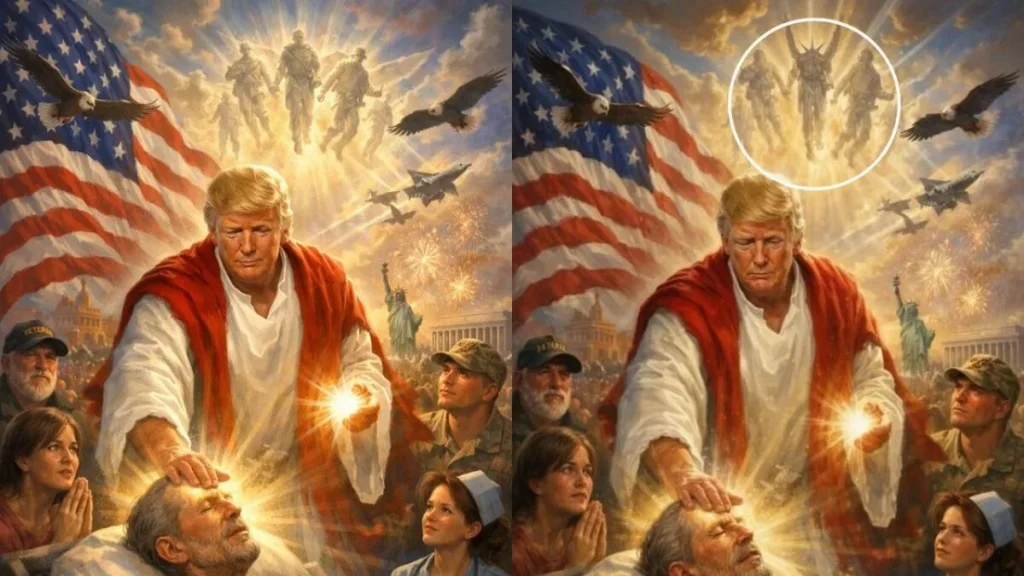
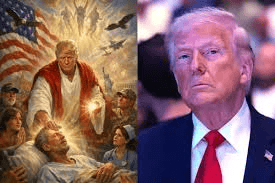
Additional controversy followed after Trump shared a series of highly symbolic images and posts on social media, including depictions that critics described as provocative and inappropriate, further fueling public debate over his rhetoric and conduct.