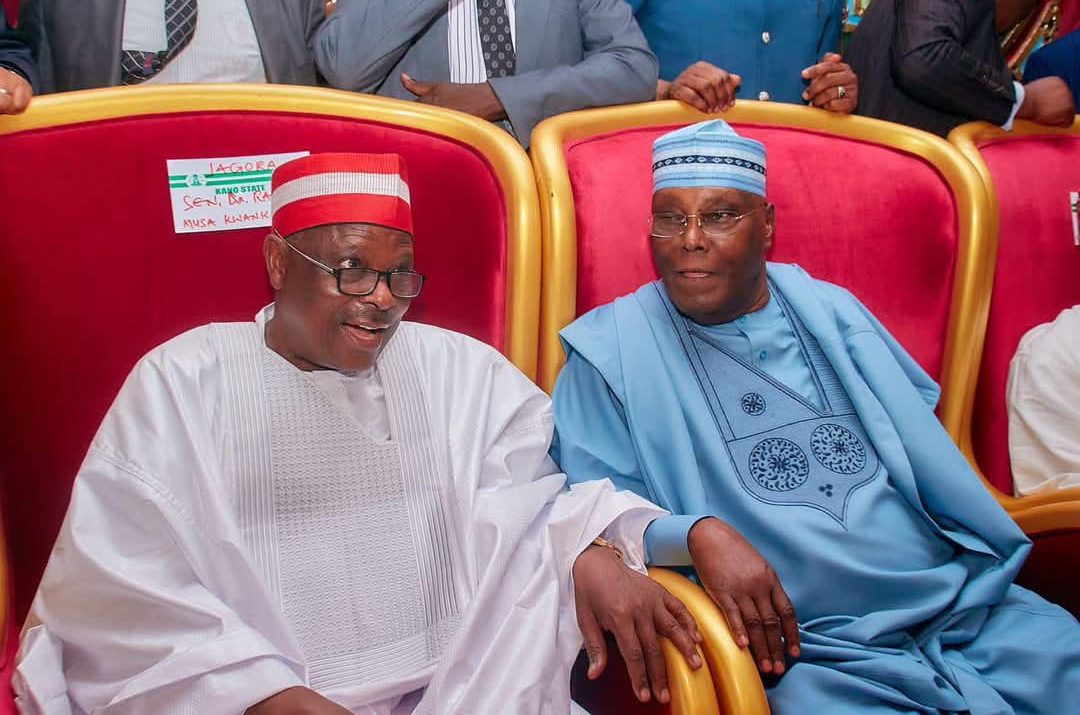

In Nigeria’s political theatre, some figures never truly leave the stage. Atiku Abubakar, former Vice President and 2023 PDP presidential candidate, and former Kano State Governor Rabiu Musa Kwankwaso exemplify the persistence of perennial contenders, returning election after election, recalibrated yet still chasing the presidency. Both men are now aligned with the African Democratic Congress (ADC), signalling another chapter in their long-running political narratives.
Since the Fourth Republic, Atiku and Kwankwaso have shown remarkable resilience, switching parties, rebuilding alliances, and re-entering races many considered lost causes. Atiku has been a member of four parties since 1998, PDP, ACN, APC, and now ADC leaving and returning to the PDP twice along the way. Kwankwaso has followed a similar path, moving from PDP to APC, back to PDP, then to NNPP, and now ADC. Despite their manoeuvres and political experience, the presidency has remained elusive, reflecting a broader trend in Nigerian politics: the normalisation of repeat ambition and the recycling of familiar candidates.
Their continued relevance stems from established networks that span party hierarchies, business elites, and regional power blocs. Name recognition gives them an inherent advantage over newcomers, while a fragmented opposition allows perennial candidates to remain influential even when their electoral prospects are limited. At the same time, both men operate with a deeply held conviction that success is not a matter of “if” but “when.”
Yet the cycle carries consequences. The repeated presence of dominant figures can stifle new voices, particularly younger politicians seeking to break into entrenched political structures. It can also breed voter fatigue, as the recycling of familiar candidates may feel like stagnation rather than stability. In some cases, elections risk becoming contests of endurance rather than innovative policy debate, rewarding persistence over fresh ideas.
Atiku and Kwankwaso embody a striking paradox: powerful yet repeatedly unsuccessful at the highest level. Atiku is one of Nigeria’s most formidable political negotiators, with national networks few can rival, but his appeal has often failed to translate into decisive victories. Kwankwaso commands one of the most loyal grassroots followings in the North, yet struggles to expand that base into a national coalition. Together, they illustrate the limits of both elite consensus politics and regional populism in a country as complex as Nigeria.
As the 2027 election cycle approaches, the question is no longer whether these men will run again, but whether they can reinvent their political relevance. Will they remain contenders or evolve into kingmakers? Can they unite opposition forces or further fragment them? Or will a new generation disrupt the cycle they have come to define? Every political cycle eventually reaches a breaking point. For Nigeria, that moment may come when a fresh coalition rises above old divides, a younger candidate captures national imagination, or perennial contenders choose legacy over ambition. Until then, the cycle continues: familiar names, familiar battles, familiar outcomes.